

Social and Relationship Capital
Creating Value through and with our Customers
Maintaining a strong and harmonious relationship with our customers and clients ensures the success of our businesses. We believe that through them, we deliver our mission. Through regular engagements, we solicit feedback and insights to further improve our offerings and ensure that their needs are met so they too can give their best in their work. We innovate our roster of products and services to meet the ever-growing demands of our clients and customers.
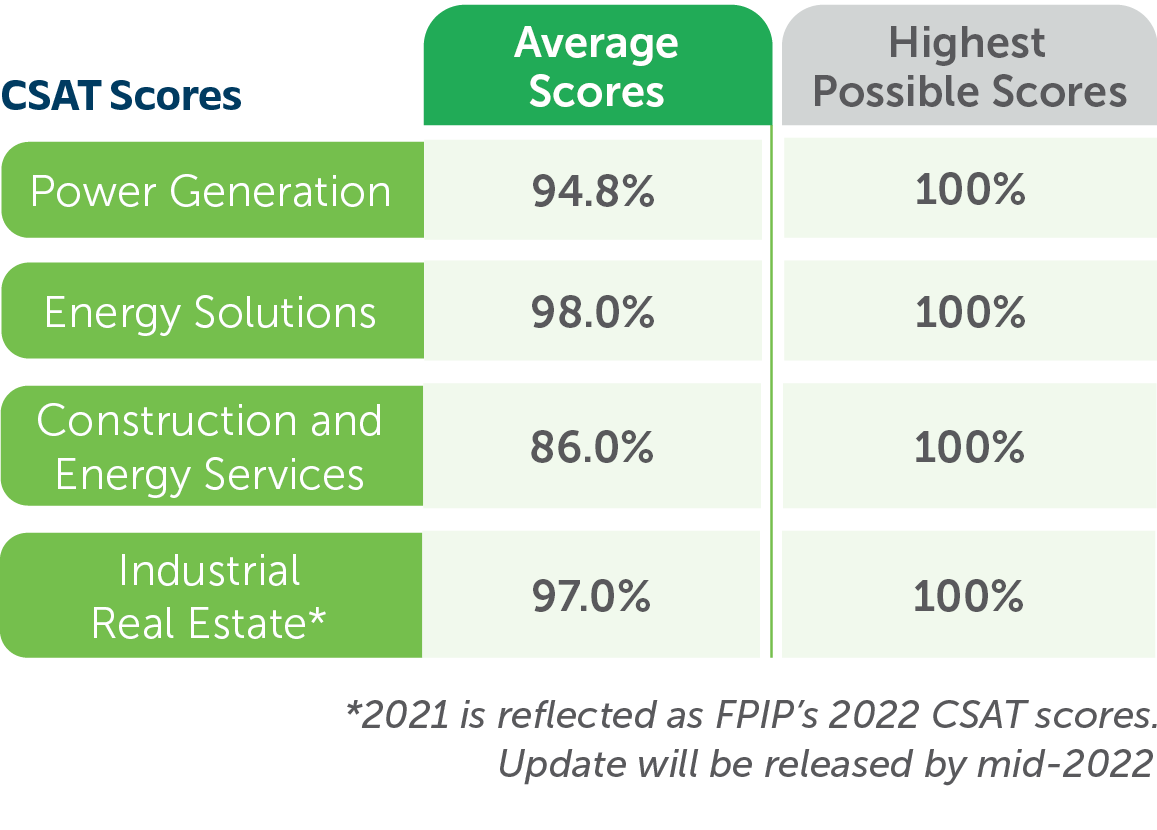
To quantitatively assess our performance, we regularly conduct customer satisfaction (CSAT) surveys. In 2022, our CSAT scores generally garnered favorable results. Our business segments continue to enjoy its existing roster of customers and clients while aggressively expanding our market reach.
Aside from simply delivering value, we also ventured into being proactive service providers by co-creating with our customers to ultimately attain their business objectives and their respective sustainability targets. Our energy solutions segment ventured with Meralco in 2022 to discuss areas of partnerships to fast track their sustainability goals. Through the First Philec-Meralco Sustainability Conference, our business leaders shared their plans and current offerings, such as the Advance Metering Infrastructure (AMI), Biodegradable Distribution Transformer (BioDT), and Super Green Transformer, to align with their customer’s sustainability agenda. Our industrial real estate segment continued to enjoin its locators on our corporate mission. In 2022, they conducted a comprehensive waste management study to identify and resolve pain points while coming up with solutions that may ultimately be offered as a new service to locators. By the end of the year, they worked with select locators to assess the feasibility of the proposed solutions.
Creating Value through and with our Customers
As co-creators in delivering value to our customers and other stakeholders, we ensure that our vendors, suppliers, and business partners share our vision in attaining our corporate mission. We continued to capacitate them through setting up policies and training to support their needs so they can join us in meeting our business objectives. In 2022, we had parallel projects involving our supply chains:
Development of guidelines for responsible sourcing The study was piloted in the head office and power generation segment. Through the updated Vendor Accreditation Policy and Guidelines, we reiterated our attention to the quality of our vendor’s outputs while integrating a screening mechanism to assess their environment, social, and governance (ESG) impacts. This features a code of conduct for our vendors to abide by and a pilot data gathering exercise to probe and stock-take on the following ESG information: adherence to our social safeguards policies (Human Rights, Gender Equality and Diversity, Respect for Cultural Heritage and Indigenous People), health and safety practices, environment impacts, and business ethics. The results of this exercise shall further inform a finalized criteria to be used by our vendor accreditation team in screening vendors aligned with their ESG impacts. Vendors impacted by the policy are expected to comply in 2023. The rest of the FPH subsidiaries are reviewing these guidelines for incorporation in their own procurement codes.
Engagement tools to assist vendors to contribute to climate action We piloted the project in our construction and energy services segment. The activities included workshops on sustainable supply chain, climate change risks and opportunities and estimating carbon emissions through the carbon footprint calculator of the Ako Ang Bukas (AAB) Movement, a civil society organization and partner of FPH which is advocating for climate neutrality by 2050. The next modules will include a value chain analysis and identification of carbon reduction measures. The construction segment is forging an agreement with their suppliers to be the platform to sustain the initiative.
Partnering with suppliers vs. plastics In efforts to reduce the plastic waste produced by our energy solutions segment, they influenced their suppliers to cut down on plastic packaging. They also became proactive in choosing reusable packaging, such as those that can be returned to suppliers for refill, for their raw materials.
Sharing our Mission with External Stakeholders
True to the essence of our mission, we continued to collaborate with like-minded organizations to realize our mission. In 2022, we shared our climate advocacy and best practices in 27 activities reaching 11,666 participants from the government, business, academe, and civil society organizations. Our external engagements in 2022 are detailed in Annex 4 at page 207.
We partnered with the government to meet the global goals and to contribute to the country’s sustainable development agenda. In 2021, the National Economic Development Authority (NEDA) launched a national secretariat to liaise a whole-of-nation approach in the achievement of the Sustainable Development Goals (SDGs). The secretariat formed the SDGs Stakeholder Chamber consisting of business including FPH, industry associations, and civil society organizations. The Chamber ensures better coordination of the SDG contribution of the private sector to complement the government’s own SDG work.
As a member of the Chamber, our company was given the opportunity to align our current efforts and initiatives with the SDGs targets of the government. A gathering was conducted in each quarter of 2022 to discuss developments and achievements, the release of the Philippines’ 3rd Voluntary National Review (VNR), and to collaborate through sharing of knowledge and existing best practices related to sustainable development. Moving forward, we hope to continue our partnership with NEDA to further co-create strategies and initiatives for the achievement of the SDGs in our country.
In communicating our efforts to external stakeholders, we have employed the use of social media sites like LinkedIn. We share bite-size information to better explain our mission, while sharing our current achievements in the sustainability and regeneration space. We also use this medium to attract talents that will join us in attaining our mission.
Safeguarding the Rights of our Stakeholders
To attain a truly regenerative business, we ensure that our business operations respect and protect the human rights of our stakeholders. In 2022, we completed setting up a robust Human Rights Due Diligence (HRDD) process within the conglomerate. In doing so, we capacitated our subsidiaries to accomplish their respective Human Rights Management Plans (HRMP) and its complementary Grievance Redress Mechanisms (GRMs). Through these tools, our subsidiaries have created bespoke measures to properly identify potential negative impacts to human rights in key functions while creating measures to properly address and mitigate them, if these rights will be transgressed.
Our Human Rights Due Diligence Activities
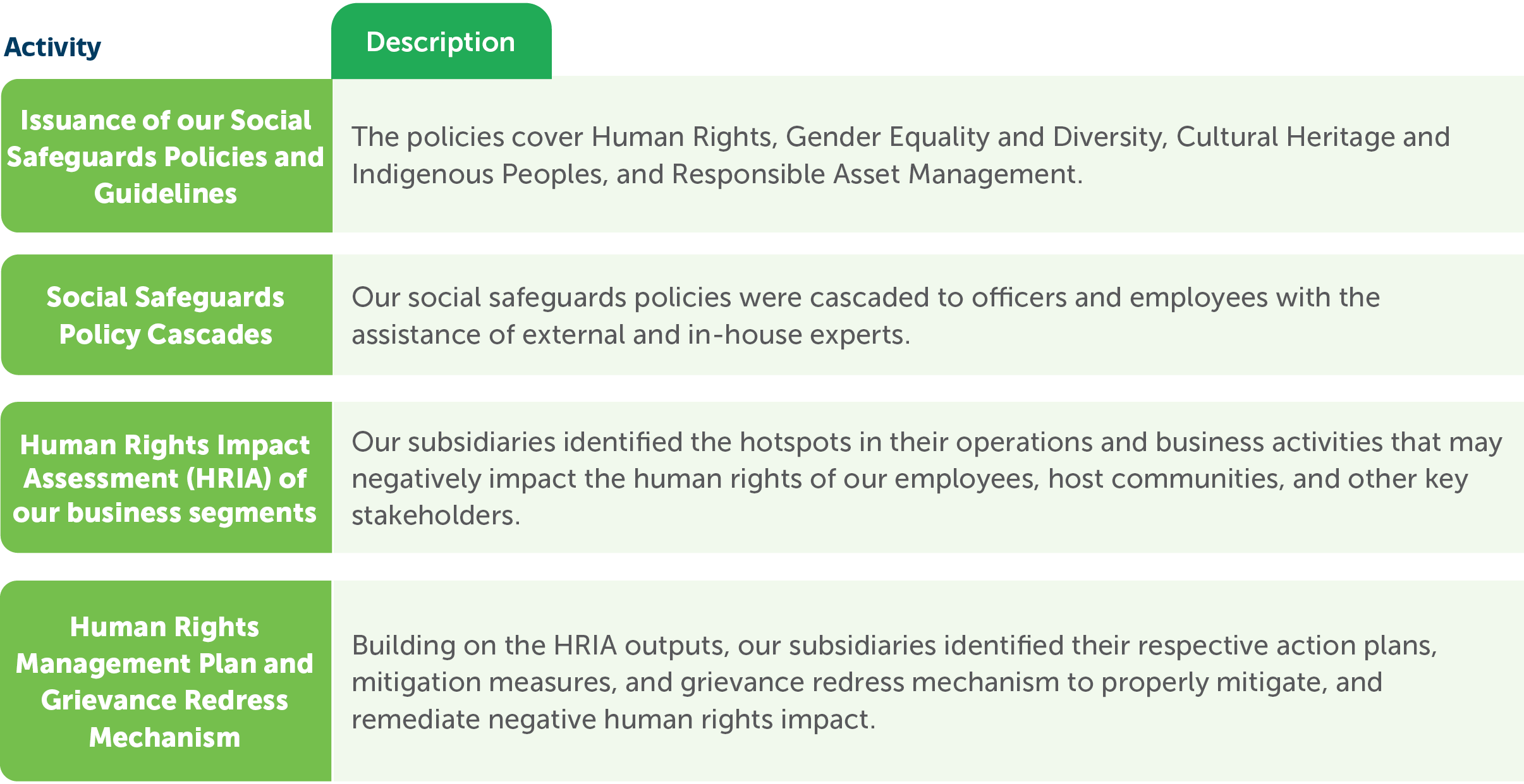
We employed an impact assessment framework to systematically act on human rights concerns in our business value chains. To kick-start the process, our subsidiaries were capacitated on the rights that should be enjoyed by our stakeholders (employees, customers, host communities, and other affected entities). Afterwards, we looked at company processes where impacts may arise. Identifying these hotspots assists our subsidiaries in crafting preventive, mitigating, and remediation measures to properly act on these concerns. Guided by their respective human rights management plans, the subsidiaries installed monitoring procedures to ensure that these risks and concerns are properly prevented or addressed.
Conceptual Framework in identifying Human Rights Concerns in Business

Complemented by these management plans are the establishment of robust Grievance Redress Mechanisms (GRM). Through this, stakeholders can raise issues and concerns to the business and seek remedy when they perceive a negative impact arising from business activities. Ultimately, a GRM aims to restore individuals and groups that have been harmed. This tool is an effective way to identify potential and actual human rights issues, address these, and monitor similar incidents to prevent recurrence. This also positively impacts stakeholders as it safeguards their human rights.
Standard Procedures for Grievance Redress Mechanism (GRM)

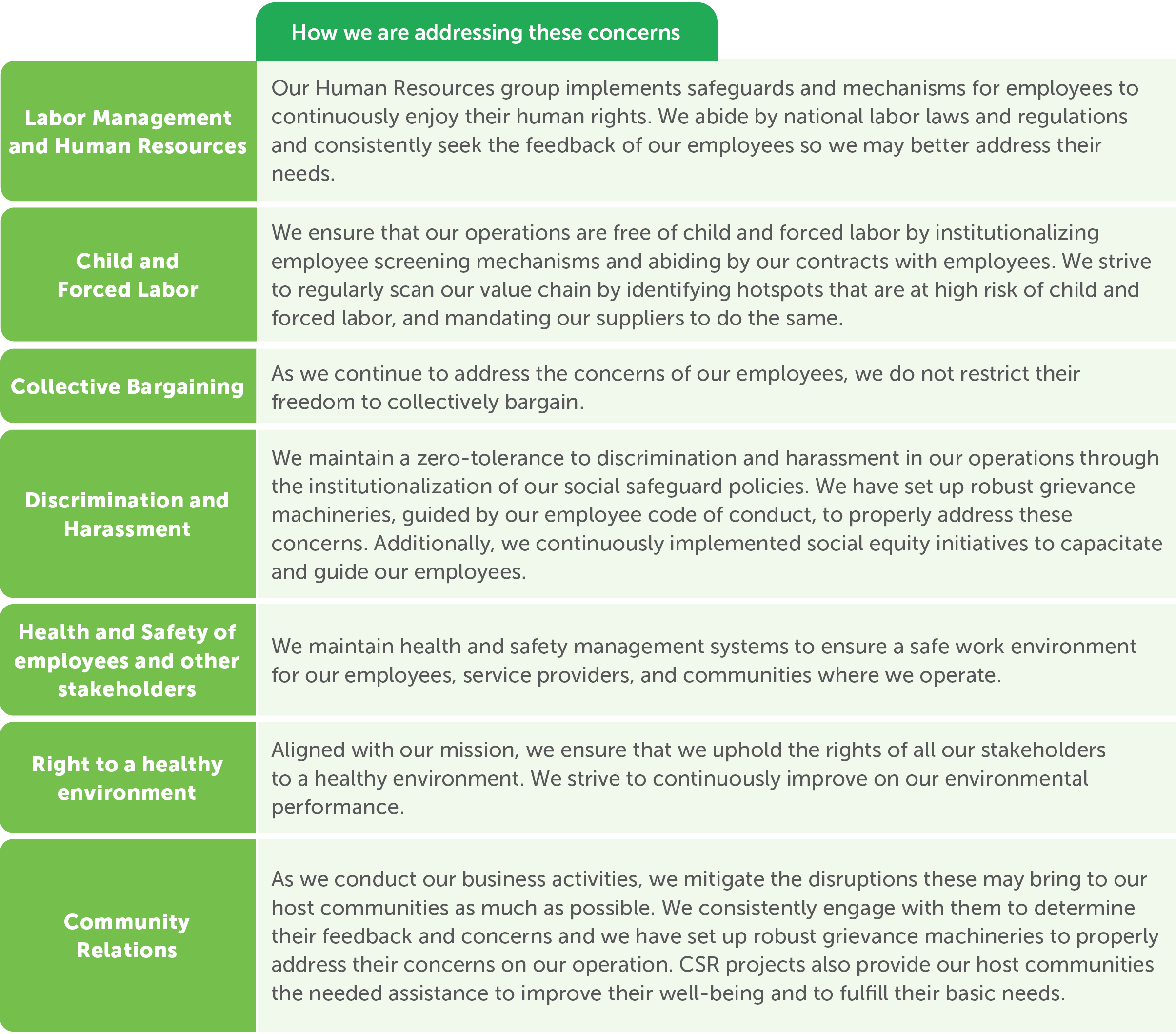
Through our HRDD process, we have identified key areas where human rights can be negatively impacted, and we consistently identified how these risks and concerns are to be addressed.
Human Rights Risks and Concerns
Empowering our communities
In the implementation of our mission, we have a role to safeguard and restore the integrity of the environment and social systems we are nested in. Our discussion on our environment and biodiversity initiatives can be found in our Natural Capital Performance on pages 112-115. As we continue to advocate for these, we believe that meeting the needs of our host communities further empowers them to become self-reliant.
We have implemented engagement mechanisms with the communities situated in our areas of operations, and our power generation segment is compliant with national regulations on benefits sharing with communities that host our power plants. Creating meaningful engagements with our host and local communities allows us to acquire social license to operate in various parts of the country.
One of our power assets, Mt. Apo Geothermal Project is operating within the area of Indigenous Peoples. For this sector, we are guided by the GRI 411 as well as the Indigenous Peoples’ Rights Act of the country (RA 8371). Based on the law, we respect the four bundles of rights of our host IP community, namely: a) right to their ancestral domain, b) right to self-governance and empowerment, b) right to social justice and human rights and d) right to cultural integrity.
Through our social development initiatives, we address the health, safety, and welfare of our communities, empower the youth through our education programs, and provide opportunities to improve income sources through social entrepreneurship and sustainable livelihood.
Healthcare
We assisted various community health centers by providing infrastructure to strengthen their local health systems and equipment support to meet the medical and well-being needs of our communities. Our subsidiaries continued to promote their iWASH (water, sanitation, and hygiene) program, an initiative that promotes and provides access to clean water and sanitation facilities in local barangays. Water filters, which are critically needed after storms, were donated the communities for potable drinking water. Our industrial real estate segment installed handwashing facilities and hygiene kits to 15 public schools in Batangas that benefits students and teachers.
In assisting the need for blood for emergency and medical situations in our communities, our industrial real estate segment conducted blood donation drives through the active participation of locators and employees. Our construction segment also conducted a blood donation drive from their employees.
To support our communities which still experience the COVID-19 pandemic, we donated 67,020 vaccines to 14 local government units (LGU) and two institutions in support of the vaccination efforts of our local communities. Our industrial real estate segment provided personal protective equipment (PPE), vaccination supplies, and other medical supplies to augment these initiatives, benefitting medical frontliners.

Education
To empower the youth in maximizing their potential, we offered education programs to our partner communities. Doing so grants them equitable opportunities to succeed in the future and support their families.
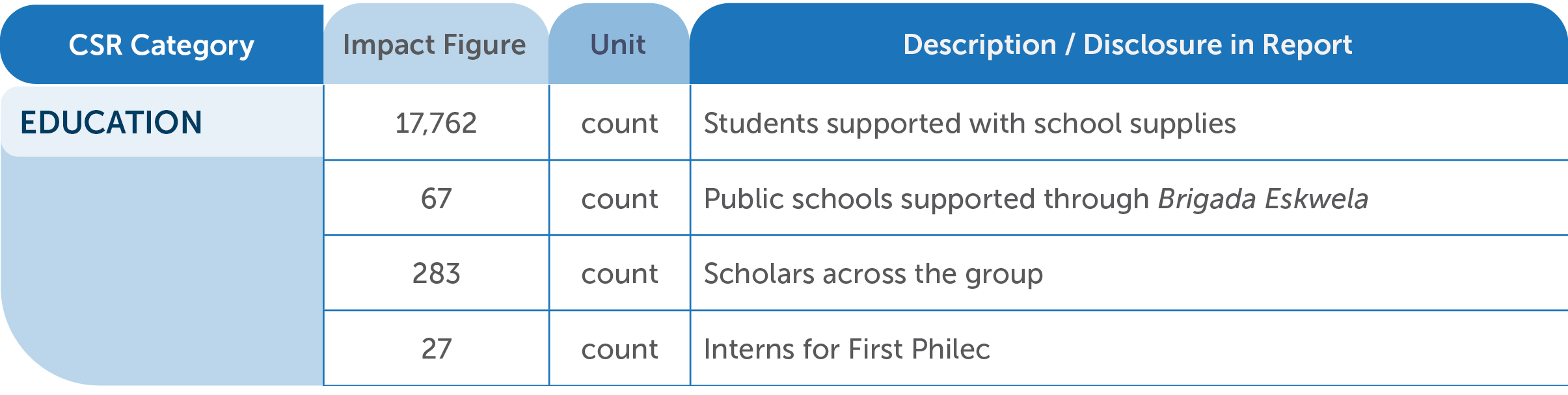
We have been continuously active in participating in the Brigada Eskwela activity of the government, wherein public schools are refurbished and renovated before the beginning of the new school year. Through the participation of our employee volunteers across the conglomerate, students from 67 public schools within our local communities enjoy a safe and conducive learning environment.
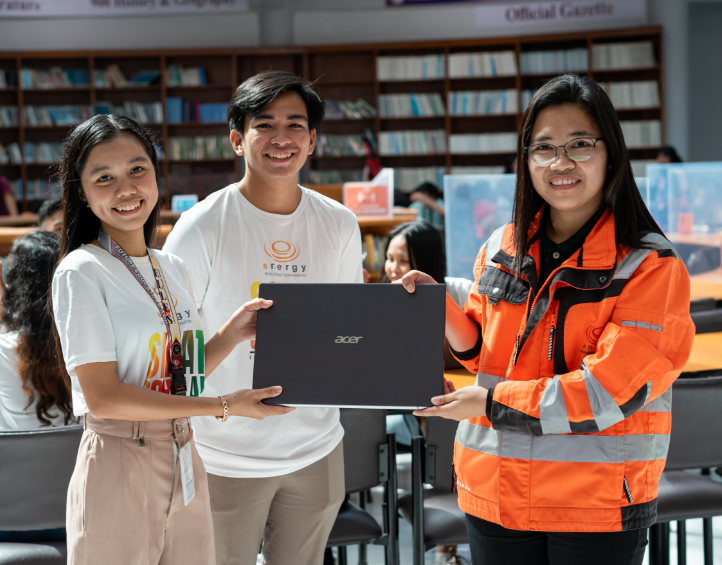
Tools to maximize the learning experience were also supplied to students within our partner communities. Our power generation business provided school supplies to assist at least 9,665 students. Laptops were also issued to students in our partner communities in Kidapawan to further support blended learning. Our industrial real estate business donated photocopying machines and reading spaces to local public schools benefitting around 8,907 students.
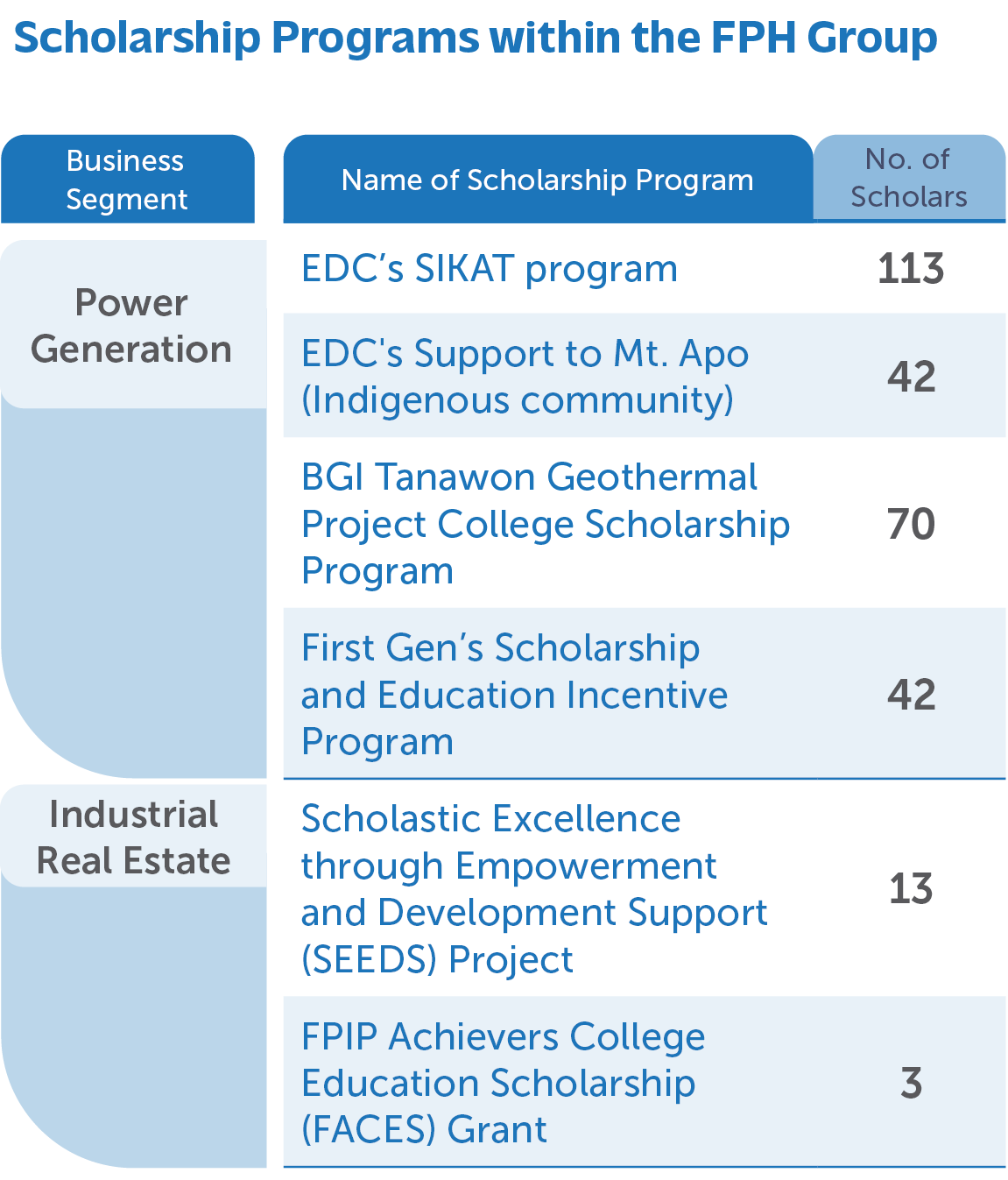
In addition to these, we sponsored 283 students through our scholarship, educational incentives, and financial assistance programs.
In supporting students into their entry to the workforce, our energy solutions segment accepted 27 students in their internship program. This served as an opportunity for them to learn more about various operation and business support functions. Interns were immersed in any of the following roles: product development, customer relations, corporate planning, enterprise services, and finance. Various internship programs are also rolled out in our business segments in support of the easing COVID-19 restrictions in the country and resumption of face-to-face work.
Social Enterprise and Sustainable Livelihood
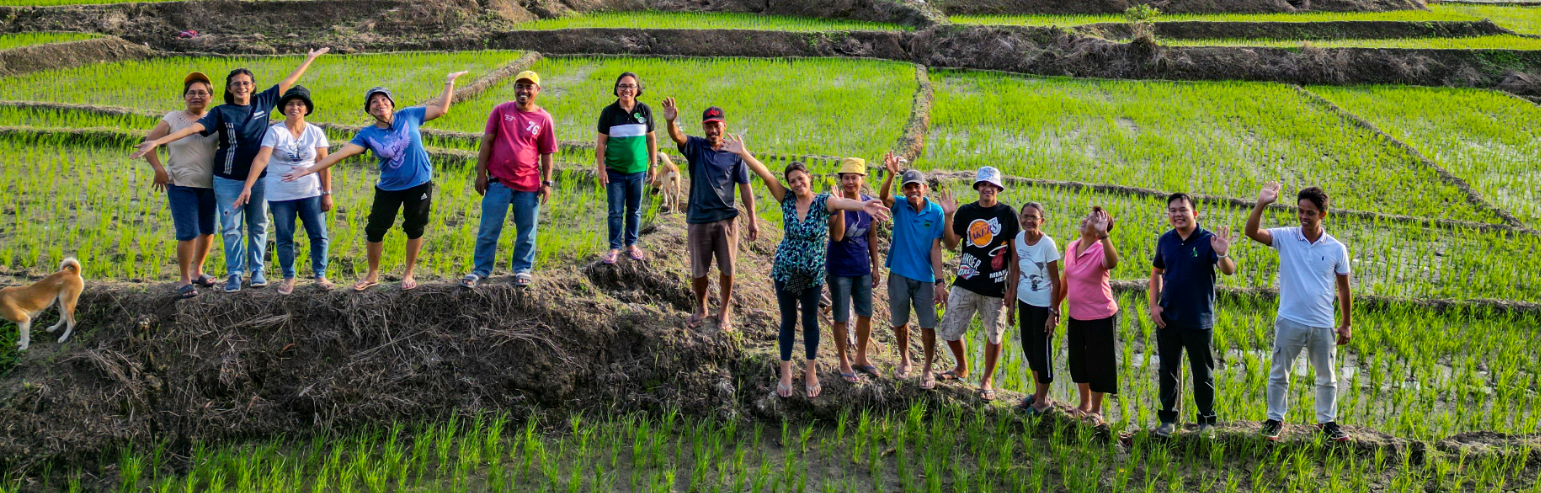
We provided our communities’ opportunities to improve their sources of income through social enterprises. Our construction segment gathered the support of its employees to donate 10 knapsack sprayers to farmers to help them water and fertilize their fields. To support partner orphanages, they purchased 10 boxes of agricultural produce from farmers amounting to PhP183,800.
Our power generation segment sustained support to our farmer associations in their involvement in our environmental restoration and conservation efforts.
Their projects include cacao and coffee enterprises through Tongonan Farmers’ Association (TOFA) and Coffee for Peace, Inc., ecotourism enterprise through Alliance of Bacman Farmers Association Incorporated Agriculture Cooperative (ALBAFAI), and various small scale social enterprises throughout the country.
Social Welfare Activities
Despite being in highly-urbanized areas, our head office, construction, real estate, and energy solutions segments continued to support the local needs of our host communities. Through efforts across the conglomerate, we donated Christmas donation packages which contained groceries, medicines, and other personal care items that benefitted multiple households across our areas of operations. Beneficiaries included security and other support personnel, parishes, orphanages, and indigent members of our communities. Support provided by our real estate and energy solutions segment totaled to PHP1.41 million. Our industrial real estate segment assisted locators to organize a kid’s party to spread the spirit and essence of Christmas.
FPH Foundation Activities
Collaborating with other Lopez companies through LGFI
The Lopez Group Foundation Inc. (LGFI) harmonizes and synergizes the corporate social responsibility (CSR) efforts of the FPH group and other affiliated companies. Through these collaborative efforts, we can tap and maximize the advocacies and expertise brought by these companies to continuously deliver exponential value to our stakeholders.
Building on the Integrated Area Development (IAD) liaised by LGFI in 2021, companies within the Lopez Group have been active in building and increasing the momentum in the delivery of impacts in alignment with the seven (7) Advocacy Clusters: Environment, Education, Child’s Rights and Development, Humanitarian Action, Social Entrepreneurship & Sustainability Livelihood, Health & Wellness, and Arts & Culture. Rather than working separately, these clusters complement each other in realizing tangible impacts for our communities.
As a pilot, the IAD sustained its initiatives on Environment, Sustainable Livelihood, Child’s Rights, and Education in one of our communities in Lobo, Batangas.The program aims to empower communities and elevate their lives, through:
- Raising awareness on children’s rights among the community members;
- Develop a localized science and education program and enhancing the capacities of teachers;
- Develop a regenerative program using the ridge-to-reef framework; and
- Establish community-based social enterprises while ensuring environmental sustainability
Despite only implementing the initiatives within a year and a half from its inception, our partner communities have already reaped the fruits of our group’s labor.
Our power generation segment spearheaded the environment initiatives in Lobo. The outcome of these initiatives are featured in our Natural Capital Performance, which can be found at page 113. With regard to the community-based programs, we capacitated members of the local community during the height of the COVID-19 pandemic to re-capitalize on sustainable ecotourism through reopening and improving on their social enterprises. We conducted trainings and workshops to strengthen their systems and organizational capabilities along with supporting the re-building of their infrastructures to support the reopening of their sites. By mid-2022, our partner organizations in Lagadlarin and Olo-olo doubled their profits from ecotourism activities compared to their 2021 earnings. In gathering the support of other external stakeholders in this front, LGFI acquired a PHP200,000 commitment from Kerry to support other agriculture-based livelihood projects in the area.
In supporting and protecting child rights, we conducted various capacity building and training sessions on Children’s Rights and Child Abuse, Mental Health, and Financial Literacy. A training on Early Childhood Development was attended by 50 parents, while 17 teachers and parents attended the launch of the Child Safe Schools Project. Additionally, we presented Child Protection Policies and Programs for the consideration of our partners in Malabrigo Elementary School.
We partnered with Center for Integrated STEM Education (CISTEM) and FilSciHub in promoting the value of science, technology, engineering, and mathematics (STEM) education for students. To support educators, forty (40) teachers from the Malabrigo Elementary School were capacitated on applying Learning Effectiveness through Enhanced Pedagogies (LEEP) in science subjects such as Biology and Chemistry. Additionally, we provided Knowledge Channel Portable Media Library to eight (8) schools in Lobo.
Oscar M. Lopez Center
In 2022, OMLC produced 38 publications, documents, thought pieces, and articles to support international and national efforts in further studying climate change, its impacts, and adaptation and mitigation measures. Its head, Dr. Rodel Lasco has been involved in the production of the International Panel for Climate Change’s Assessment Report 6 Working Group 2 (IPCC AR6 WG2) and its companion document, Summary for Policymakers, to better inform governments on the latest developments in climate change adaptation and mitigation. With the exacerbating impacts of climate change, the reports also raise the urgency for governments to take swift action and the need for continuous assessments to determine the viability of existing policies and practices. Stakeholders from the private sector, government, academe, and local communities were invited to the online Stakeholders’ Briefing on the IPCC AR6 WG2 held in March 2022.
In their continuous support to the government, OMLC launched the eCCET Helper and Upturn Tool in 2022. The eCCET Helper aims to strengthen the climate planning and budgeting process, through the Climate Change Expenditure Tagging (CCET), of local planners by translating the key messages of the Philippine Climate Change Assessment Reports to enable them and decision makers to make risk-based, climate-informed planning and budgeting for climate action and sustainable development. These tools are constantly updated by the Center to ensure its relevance to end-users.
Following the success of their information, education, and communication campaigns, the Center also launched a series of short films through Mga Kwento ng Klima (Stories About Climate Change) (MKK). MKK is a competition for professional and independent filmmakers that aims to generate climate stories told from the local context, highlighting unique climate realities and notions of resilience, in local languages. Of the eight finalists, the film “Dalaw” by Underwater Playground was recognized as the best short film. This was followed by “Those who were drowned and missing” by Antipara Films, and “Groot Chat” by Gyoza Films and “Pungsod Sang Lawod” by Ocean Trekkers tied at 3rd place. These films were presented to our stakeholders in 2022, with the trailers to be available to the public in the near future.
To further encourage turning climate stories into action, OMLC partnered with Asia Society Philippines in bringing Ang Ating Kwentong Klima. The project is a four-part episode series exploring climate change impacts on food, island communities, culture, and the future based on stories submitted through the Balangay Media Project. Along with storytellers, each episode features a technical expert and advocate to share their knowledge and experience on the issue. These episodes were released last November 2022 and are currently available through the Asia Society Philippines online channels.
Sikat Solar Challenge Foundation, Inc. (SSCFI or Sikat)
Sikat continued its momentum in providing electricity for their communities in the Rizal Province and Mindoro through the implementation of their Liwanag sa Sitio (Lights in the Community) program and Kaibigang Araw (our friend, the sun) initiative. Through Liwanag sa Sitio, community members receive a charging station system and access to electricity, with a condition that they are obliged to tend and maintain the provided systems. After three years, the system will be turned-over to the communities and are given the opportunity to further develop and expand the system. Through Kaibigang Araw, Sikat deployed an initial system to support the livelihood needs of beekeepers in Sitio Pamuwisan, Victoria. Additionally, the community members also received communication support, in the form of mobile signal boosters, to assist them in their needs and disaster preparedness.
In ensuring the efficacy and impacts of their initiatives, Sikat gathered the feedback and insights of their stakeholders and beneficiaries in 2022. The assessment garnered positive feedback from stakeholders, citing the importance of electrification in the productivity of students and members of the community and how these systems are more affordable than conventional sources of electricity. Respondents also noted the benefits of better mobile connectivity provided by the signal boosters.
Sikat has also continually worked with the employees of FPH to support their current and expanding roster of initiatives. In 2023 and beyond, tey will open the Sikat Program to employee volunteers and encourage them to participate in electrification efforts in Tanay, Rizal.
Ang Misyon Inc.
With the easing of the COVID-19 restrictions in the country, Ang Misyon and members of the Orchestra of the Filipino Youth (OFY) had an opportunity to continue in-person activities that were halted during the pandemic to continuously reconnect with their supporters to share how Ang Misyon and OFY scholars have come. Aside from the routine in-person rehearsals and sectionals, Ang Misyon conducted their first Music Camp since the pandemic began. Through these, scholars of the OFY had an opportunity to maximize learning about music while interacting with their mentors and peers face-to-face. A recital was conducted after the camp, which encouraged scholars to invite friends and family members as part of the audience.
In celebrating OFY’s anniversary in 2022, a live concert was held at the Cultural Center of the Philippines in October 2022 in partnership with National Music Competitions for Young Artists (NAMCYA), an organization that shares a similar mission of nurturing young musicians. Scholars demonstrated their musical prowess through a repertoire that featured classical pieces and Filipino compositions.
Summary
• Completing our Human Rights Due Diligence process in 2022 allowed us to systematically protect and respect the rights of our stakeholders.
• We continuously engaged with our customers and clients to gather insights on our product and service offerings in 2022, which garnered positive satisfaction results. We also co-created with them to continuously support them in their business and sustainability objectives.
• We worked with our suppliers to ensure the smooth operations of our business segments. We have continuously encouraged them to partake in our corporate mission through collaborative efforts.
• Through our CSR initiatives, we continued to support our host communities to meet their needs and empower them to be self-sufficient. In 2022, we invested PHP199.2 million to implement our social development and environment conservation initiatives.
• In supporting the continuous efforts of the government to combat COVID-19, we donated 67,020 COVID-19 vaccines and capacitated various health centers and frontliners across the country.
• Our business segments continued to support the vision and mission of our partner foundations.
Non-Financial Outcomes
Our social and relationship capitals were preserved and improved upon as we maintained meaningful engagements with our customers, co-creators, and host communities in collaboration with our partner foundations.
Financial Outcomes
As we continue to maintain our social license to operate, we ensured the smooth operations of our businesses in our areas of operations. We also anticipate the positive reception of our customers, co-creators, and other partners in the delivery of our value to society.


