

Human Capital
2022 Employee Profile
Employee Engagement and Well-being
Through our strong employee engagement and well-being programs, we continue to create meaningful engagements with our employees. These ensure that their well-being is at the top of our priorities and that their needs are properly addressed.
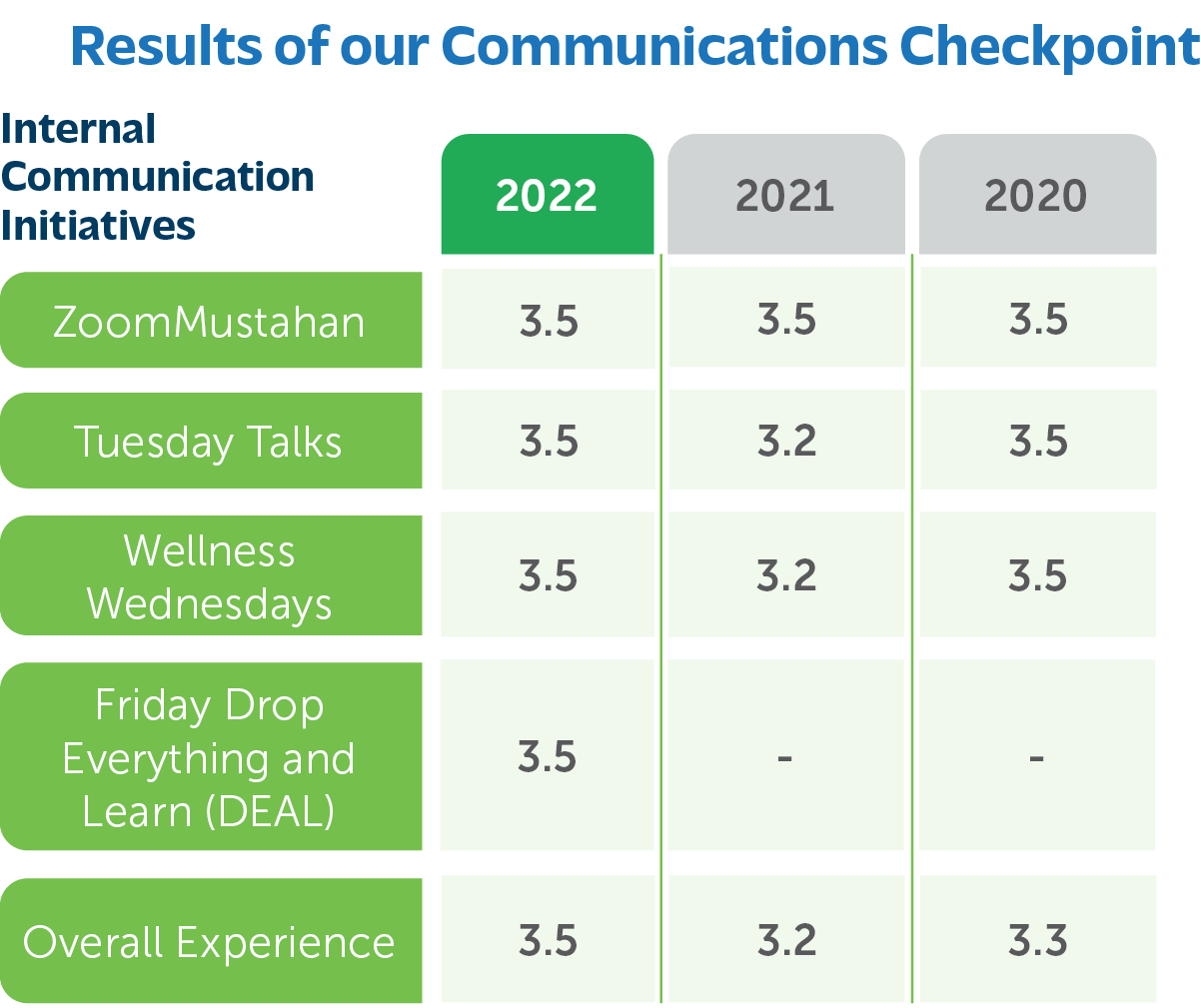
We continue to deliver our successful employee engagement and internal communications programs that have guided us in keeping in touch with our employees. We surveyed our employees on the effectiveness of these activities through the 2022 Communications Checkpoint. The survey garnered positive reviews, citing the improvements in content creation and the strong involvement of our leaders in these communication campaigns. In the table below, 1 is the lowest while 4 is the highest rating.
In 2022, our head office and power generation segments conducted their bi-annual employee satisfaction survey called the Voice of our People, wherein 98 percent of our employees were surveyed on their experience working with the company. The survey gathered generally positive results, at an engagement index of 67 percent, with favorable responses to all five engagement statements. The Engagement Index was significantly above the Philippine benchmark by 10 percent. Our industrial real estate business surveyed their employees to assess their well-being. The results are generally positive, with most employees coping well with the impacts of the COVID-19 pandemic and their current work arrangements.
We also gathered the insights of our employees into the way we provide our benefits package through the Pulse Survey on Employee Benefits. Based on our 2022 findings, we determined that the majority of our employees are still delighted with our current employee benefits packages. Additionally, the survey has further informed us how to better restructure the existing benefits as they are competitive with the rates in our industry. Since 2020, we have continuously repurposed the benefits package to address the evolving needs of our employees in a hybrid work setup. In 2022, we increased the coverage of our employee’s life insurance packages, as well as extended the medical insurance benefit to their common law partners and same-sex partners.
We continue to care for the well-being of our employees. This we do by providing 24/7 employee assistance we call the Reach Out Program. We complement this effort with the Here4U Program, an alternate internal support service where employees can have mental health check-ins with trained confidants. These confidants are composed of volunteer employees from the different companies of the FPH Group and are certified psychological first-aiders. The intent of the program is to have a colleague who they can confide in and talk to during moments of distress caused by work, family, relationships, or other personal concerns.
Investing in our Employees through Training and Development
As our business segments are agents of nation-building, we ensure that we empower our employees by cultivating a culture of continuous growth and development. We encourage our employees to maximize their potential by providing them the tools and growing their capabilities so they can deliver their best at the workplace, to their stakeholders, and in their respective careers.
Average Training Hours per business segment
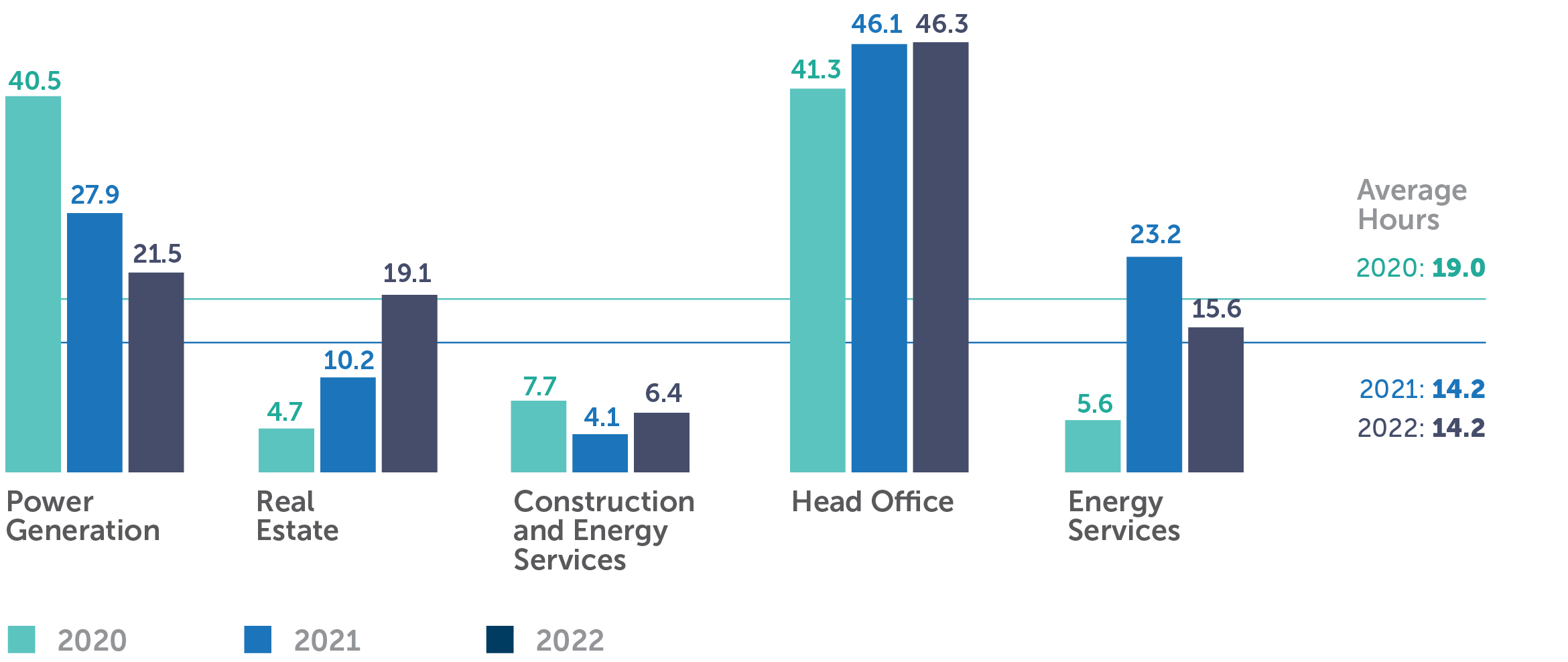
Informed by our talent strategy, we maximized available resources to provide effective and high-quality learning and development initiatives while maintaining high standards of employee proficiency. We continue to offer our learning on-demand platforms and weekly learning sessions. With the positive reception from our employees, these initiatives were expanded to other business segments within the group.
The increase in training hours for our real estate segment is a result of the reopening of our offices and adapting our best practices in the head office. Most of their training in 2022 was conducted in-person. The decrease in training hours for other business segments is due to the recent conclusion of our employee digital tools cascade to complement our new ways of working. The efficiency of our employees to utilize these tools resulted in the reduction in required training.
To further aid employees in career development, our head office and power generation segments have institutionalized two new policies: Internal Recruitment Policy and Career Development Policy. Through the Internal Recruitment Policy, we have formalized a mechanism to promote talent mobility and allow employees to explore internal job opportunities. Our Career Development Policy serves as a framework and philosophy to guide our employees and people managers in better understanding employee responsibilities and aligning them to learning solutions and other potential support from the company. We were successful to onboard employees and guide people managers on these programs.
In addition to training and career development, our employees have been heavily immersed in understanding our mission of becoming a decarbonized and regenerative business. Key corporate functions across the conglomerate were capacitated on the pillars of our mission: risks of climate change in our business (through TCFD), decarbonization using science-based targets (informed by SBTi), waste management, energy efficiency, human rights, gender equality and diversity, and aligning corporate social responsibility activities with our mission. Through these, our employees are enjoined to produce plans which will be implemented and recalibrated from 2023 and beyond.
For the rest of our employee population, we employ an evidence-based approach in embedding the principles of regeneration and we continue to optimize our playbooks to properly contextualize these strategies. We are active in our communication channels to creatively and strategically inform and capacitate all our employees on the principles of our mission. During our onboarding of new hires, various corporate functions are invited to orient new employees on our mission and how it relates to the company’s business activities. For our existing employees, we regularly communicate our progress on the mission through our quarterly townhall meetings, where leaders are invited to answer queries from employees.
We allow our employees to align their interests and values with the corporate purpose through our conglomerate-wide Employee Volunteerism initiative. Through these, they are given the opportunity to participate in our corporate social responsibility (CSR) projects. In 2022, there were 1,458 employees who volunteered in our environment conservation and social development programs.
In addition to training and career development, our employees have been heavily immersed in understanding our mission of becoming a decarbonized and regenerative business. Key corporate functions across the conglomerate were capacitated on the pillars of our mission: risks of climate change in our business (through TCFD), decarbonization using science-based targets (informed by SBTi), waste management, energy efficiency, human rights, gender equality and diversity, and aligning corporate social responsibility activities with our mission. Through these, our employees are enjoined to produce plans which will be implemented and recalibrated from 2023 and beyond.
For the rest of our employee population, we employ an evidence-based approach in embedding the principles of regeneration and we continue to optimize our playbooks to properly contextualize these strategies. We are active in our communication channels to creatively and strategically inform and capacitate all our employees on the principles of our mission. During our onboarding of new hires, various corporate functions are invited to orient new employees on our mission and how it relates to the company’s business activities. For our existing employees, we regularly communicate our progress on the mission through our quarterly townhall meetings, where leaders are invited to answer queries from employees.
We allow our employees to align their interests and values with the corporate purpose through our conglomerate-wide Employee Volunteerism initiative. Through these, they are given the opportunity to participate in our corporate social responsibility (CSR) projects. In 2022, there were 1,458 employees who volunteered in our environment conservation and social development programs.
Future of Work: Building a Culture of Togetherness, Even When Apart
Productivity within our organization is not confined to the four walls of our offices. The lockdowns brought by the COVID-19 pandemic urged our business and support groups to be creative in meeting business objectives without compromising the health and safety of employees in these times. Employees who embarked on mission-critical business activities that would require on-site work were thoroughly oriented on health and safety protocols and provided with proper accommodations to safely return to work, while support functions were allowed to meet their deliverables flexibly.
In creating a conducive environment for a hybrid workforce, our Human Resources Group laid out nine principles that illustrate how corporate functions are to transition to the future of work:
- Everyone works flexibly. We recognize that each one of us works differently and has unique circumstances.
- We design work patterns that balance our business, stakeholder, and well-being objectives.
- We are virtual-first, but not virtual only. We will maximize all modes of working effectively, and continue to build strong relationships, together and apart.
- We are mindful of how we collaborate and the purpose of our meetings.
- We invest time in focused work and learning, which enables us to be more productive.
- We encourage a growth mindset. We create an environment where it is safe to speak up and ask for help.
- We measure our performance based on outcomes and impacts.
- We take accountability and act swiftly to improve the way we work to address challenges.
- We trust each other to work in support of the company’s interests.
Our head office, power generation, and real estate Human Resource (HR) teams have conducted roadshows and workshops with various business units and support groups to guide them in implementing these principles. Coined as “Flex your Ways-of-Working (WOW),” corporate teams were allowed to discuss with themselves strategies about work flexibility, collaboration, managing the team’s performance, and accountability at meeting work deliverables. Ultimately, the sessions were intended to build trust and camaraderie within these teams to do what is best for the organization. Updates on how we are transitioning to the future of work are also communicated to employees and relevant stakeholders through our quarterly business meetings called ZOOMustahans, our official HR communication platforms, and through HR business partnering for focused and targeted business unit-specific issues.
Respecting and Protecting Human Rights in our Workforce
As a corporate citizen, we must respect and protect the rights of our stakeholders in our value chain. While we strive to go above and beyond with our initiatives to uplift and empower the lives of our stakeholders, we ensure that their basic human rights are enjoyed and celebrated. Guided by our ongoing and continuous Human Rights Impact Assessment exercises, we have strengthened our frameworks and have installed new mechanisms. Our updates on these are expounded in our Social and Relationship capital, found on pages 133-135.
In our workforce, the concerns on human rights would be on labor relations, employee unions, collective bargaining agreement, anti-discrimination, anti-harassment, risks for child and forced labor, and the health and safety of our employees. In 2022, our operations have reported zero risk and incidence of child and forced labor. In mitigating child labor, we ensure that we only hire employees of legal age whose credentials have met the minimum requirements set in the designated job descriptions. In mitigating forced labor, we are compliant with local and national labor laws and ensure our employment contracts are signed with the mutual agreement between the employee and the company.
In 2022, a total of 553 employees from our power generation and construction segments are part of employee unions. This represents 7.42 percent of our 2022 headcount. We uphold their rights to participate in collective bargaining agreements (CBA); our business segment continues to create meaningful discussions by listening to these groups while strengthening their grievance machinery for union members. Additionally, these groups have been active in our mission and social development activities. Instead of printing CBA booklets, our teams opted for digital copies. The costs saved from this initiative were donated to our scholars.
To address potential human rights risks and incidences in our workplace, our HR groups across the conglomerate are in charge of their respective Grievance Redress Mechanisms.These are anchored on existing Human Rights and HR policies as well as the Employee Code of Conduct.
Promoting a Culture of Diversity, Equality, and Inclusion in the Workplace
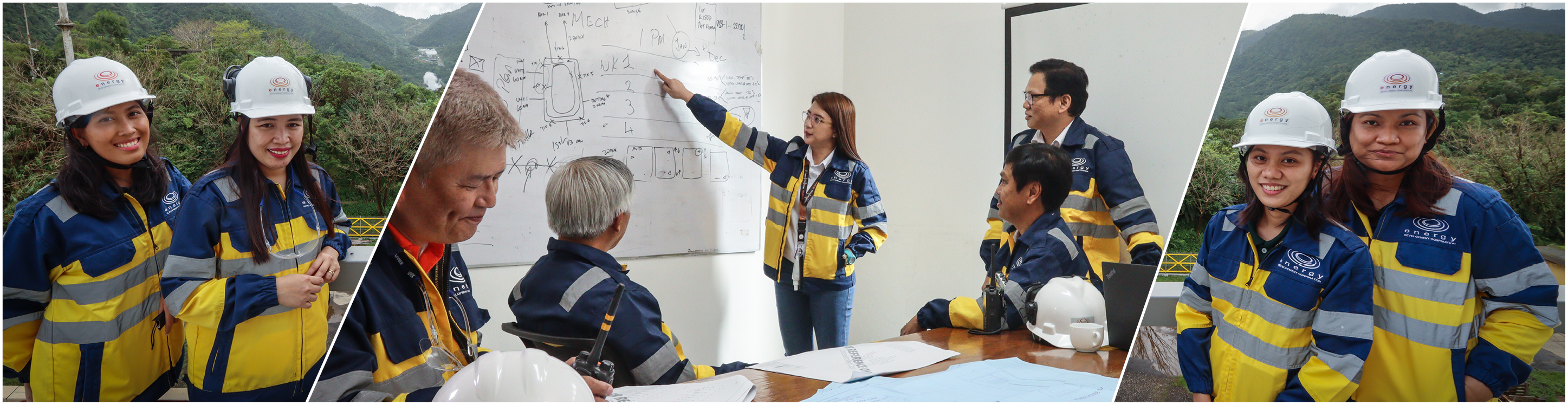

Diversity and inclusion are important tenets in upholding the essence of our mission of becoming a regenerative business. We ensure that our employees are given equal opportunities to learn, thrive, grow, and contribute in the workplace. Recognizing the value of our co-creators and providing a safe, respectful, and inclusive environment elevates our collective potential and fosters a deep sense of belonging for all.
In our thrust for gender equality and diversity (GED), we continue to provide opportunities for women to grow and build successful careers in our conglomerate. We do this through institutionalizing policies, piloting new initiatives, and networking with organizations to improve our capacity in addressing diversity, equality, and inclusion in our value chain. Across the group, 35 percent of our workforce were women employees in 2022, while managers across the conglomerate are 39 percent women.
Our head office and power generation segment engaged with various external partners, such as the United States Agency for International Development (USAID), UN Women and Global Compact Network’s Women Empowerment Principles (WEPs), and the Philippine Business Coalition for Women Empowerment (PBCWE), to expand on its capabilities on GED. With the assistance, the USAID’s Enhancing Equality in Energy for Southeast Asia (E4SEA), selected employees from our head office and power generation segment to enter an intensive 11-day training to have a deeper understanding of how gender equality can be realized in the organization. Capping off the sessions, the groups presented a brief gender action plan to illustrate how their learnings in the sessions will be applied within the HR systems and then to the entire organization. Our HR teams focused on talent attraction, hiring and recruitment, culture building, and leadership development.
The conglomerate has also become a signatory of the UN Women and Global Compact Network’s WEPs. It is a nine-principle framework that guides organizations in promoting gender equality and women empowerment across the workplace, marketplace, and community or the corporate value chain. Through this initiative, our group has access to readily-available tools to assess the status of the organization in terms of implementing global best practices on gender equality. Becoming a signatory for the WEPs has institutionalized the conglomerate’s commitment in GED. In addition to our partnership with international organizations, we recently became a member of the PBCWE. This allows our organization to further strengthen its local network and capacity in upholding GED in the corporate value chain.
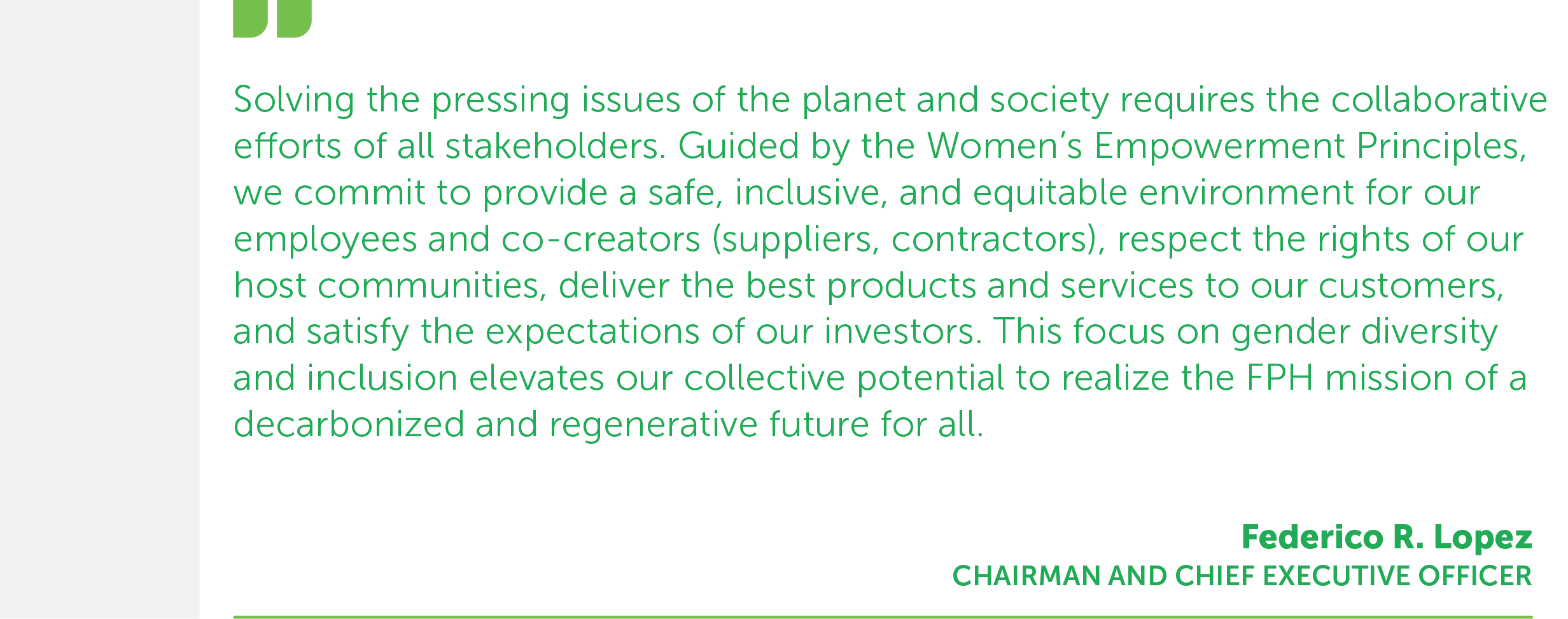
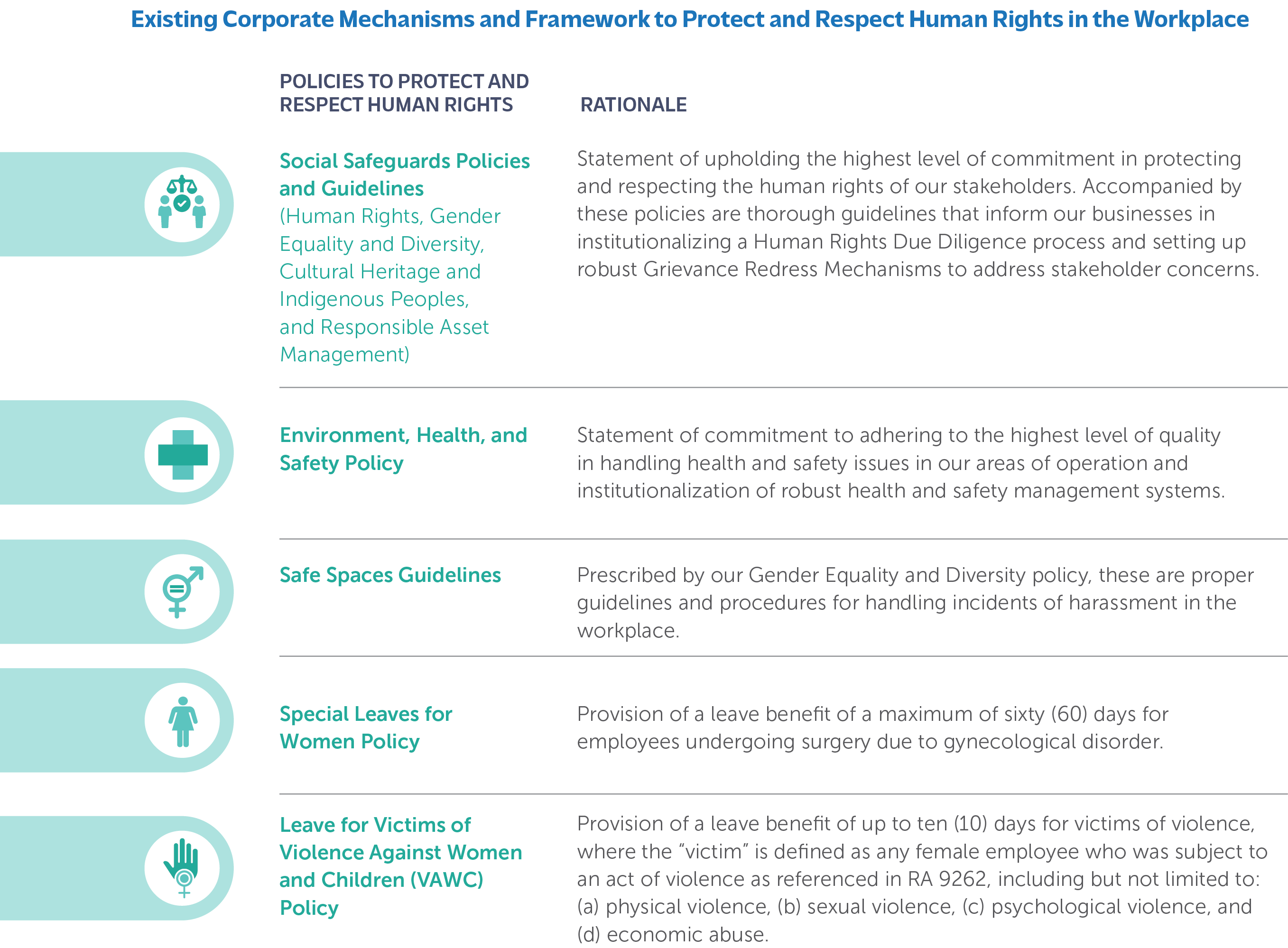
Our partnerships and collaboration with local and international experts in GED have equipped our HR teams in improving our policies to embed a culture of diversity and inclusion within the organization. We believe that these policies embody and solidify the organization’s commitment to gender equality and social inclusion. With the help of experts, we have embedded GED concepts in our Internal Recruitment and Employee Development policies, as well as institutionalized additional benefits for women employees, such as additional leaves for women with special needs and victims of domestic violence (VAWC). These benefits complement our local laws, namely, Republic Act (RA) 9710 or the Magna Carta for Women and RA 9262 or the Anti-Violence Against Women and Their Children Act of 2004.
In ensuring a workplace that is free from harassment and discrimination, our power generation and construction segments have implemented a policy to uphold Safe Spaces in 2022. Through this, gender-based sexual harassment are prohibited in all forms in our workplace. The institutionalization of this policy is heavily informed by RA 11313 or the Safe Spaces Act of 2018. Employees facing discrimination and harassment based on their sexual orientation and gender identity can freely raise their grievances guided by the existing Employee Code of Conduct and guidelines set by our HR groups.
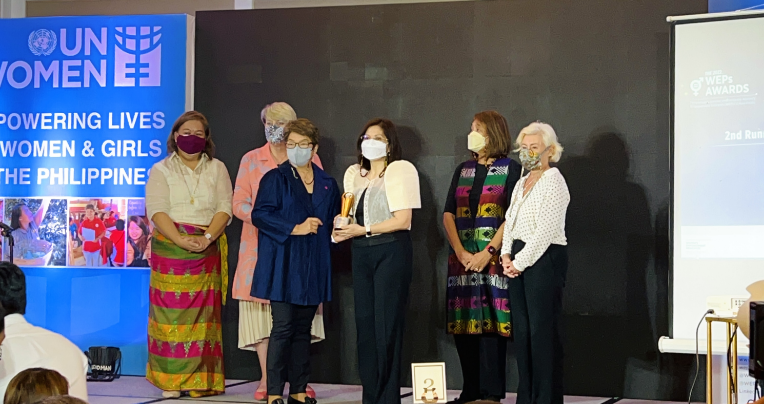
The conglomerate’s efforts to further advance gender equality and social inclusion were immediately recognized by UN Women and the WEPs. In October 2022, we were recognized as a second runner-up for the Gender Responsive Marketplace category of the Philippine edition of the Women Empowerment Principles Awards for our social safeguards policies and implementation of best practices to cascade our efforts across the workplace, marketplace, and communities. This award serves not only as a validation of our current efforts, but as a strong motivation for the conglomerate to continuously strive for diversity, equality, and inclusion in our corporate value chain.
Employee Health and Safety
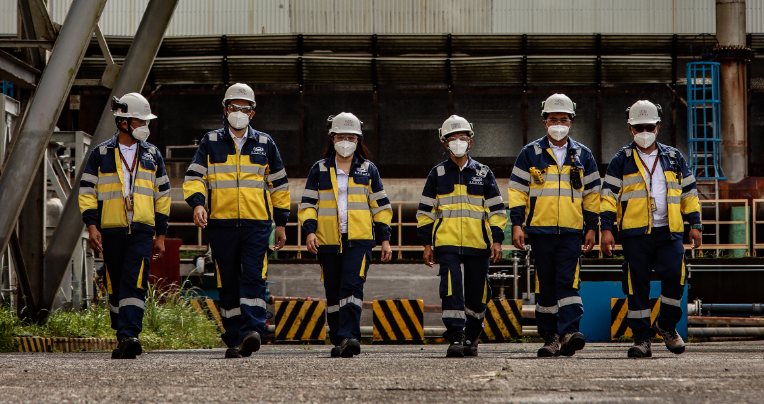
Safeguarding the health and safety of our employees are considered a top priority to ensure the smooth operations of our businesses. We are compliant with local and national laws and regulations on health and safety, and we regularly communicate with health regulators, national government agencies, and external partners to ensure our Occupational Health and Safety Management Systems (OHSMS) are updated and at par with global standards. We also regularly engage with our employees to determine health and safety risks to properly mitigate and address them.
The group’s OHSMS is administered by the Quality, Environment, Health and Safety (QESH) team of our head office to ensure that every subsidiary upholds the highest level of quality and standard in attaining employee health and safety. With the diverse nature of our businesses, our subsidiary’s health and safety teams are empowered to implement an OHSMS adaptive to their operational and project requirements. While employees and contractors are expected to manage safety concerns at their respective workstreams, our operational projects and sites have dedicated safety officers that regularly monitor health and safety concerns. This is aligned with standard operating procedures prescribed by corporate policies, as well as local and national regulations on health and safety. The OHSMS of our subsidiaries First Gen Corporation (Prime Meridian PowerGen Corporation and First Gen Hydro Power Corporation), Energy Development Corporation, and First Balfour Inc. are certified under ISO 45001:2018.
In addressing work-related hazards, a risk management approach is implemented by the group. These are identified through routine walkdowns and non-routine safety observations, which are logged in our OHSMS. Escalation procedures on work-related safety incidents are also detailed in our OSHMS to ensure that these are properly addressed. Controls are also in place to avoid future recurrence. Subsequently, our Occupational Health (OH) team regularly conducts Health Risk Assessments (HRA) to mitigate and address illnesses and diseases in the workplace.
Our power generation segment initiated a Back to Basics (B2B) program in 2022 to empower employees to address safety concerns in our power plants. Through the program, various teams are tasked to come up with creative solutions to solving several pressing safety issues in the workplace. The assigned teams are then capacitated and empowered to properly identify, mitigate, and address these safety issues. The action plans generated from the exercise are then presented in Board Committee meetings to ensure proper implementation and monitoring. Our industrial real estate segment developed procedures and programs to support their goals of having zero lost-time incidents in the workplace. Through the evaluation of their existing processes, they strengthened their current programs and updated their health and safety policy to reiterate the commitment of our leaders to the safety of all employees and contractors.
In addition to these policies and practices, our health and safety team continually trainings and webinars to embed a culture of health and safety in the workplace:
- Mandatory Occupational Safety and Health Training
- Incident Investigation for Safety and Health
- Workplace Mental Health
- Overview Of The COVID-19 Occupational Health Program
- COVID-19 Case Monitoring and Surveillance, Contact Tracing, And Referral Systems
- Preparing the Family and the Rest of the Household For COVID-19
- COVID-19 Vaccines: Back to Basics
- The FPH & Lopez Affiliates COVID-19 Vaccination Strategy
In addressing the on-going impacts of the COVID-19 pandemic, our Occupational Health group revamped our existing pandemic playbook, Pandemic Preparedness and Response Guide launched in 2018, to a comprehensive FPH Group and Lopez Affiliates Risk Based Guide in the Prevention and Control of COVID-19 Outbreak. Through this, our business segments are informed on the latest developments, protocols, and measures to properly address the risk of COVID-19 in our workforce. We continued our existing initiatives, such as Shelters-In-Place (SIP), implementing minimum health standards, contract tracing, and testing in the workplace to ensure a healthy and safe environment for our employees.
With the developments on COVID-19 vaccination, we supported the booster doses of 12,009 employees in 2022 while donating 67,020 vaccines to the local government and partner institutions. Employees, their family members, and contractors benefitted from our in-house vaccination efforts. Alternatively, employees could also avail their respective booster shots through their local governments.
With the easing local and national restrictions related to COVID-19, our OH teams have recalibrated the group’s focus to not only address the on-going pandemic, but to also address emerging health and safety concerns of employees. This prompted them to reactivate several initiatives that were sidelined in the past few years, such as employee wellness, emotional well-being, and blood supply programs.
Our consistent approach to occupational health and safety continues to promote a healthy and safe working environment for our employees and contractors. In 2022, our business segments attained a total recordable incidence rate (TRIR) that is well within industry standards. 1
1 U.S. Bureau of Labor Statistics. (2021, November 3). Industry injury and illness data - 2020. U.S. Bureau of Labor Statistics. Retrieved March 1, 2023, from https://www.bls.gov/iif/oshsum.htm
Summary of 2022 Health and Safety Data for All Employees
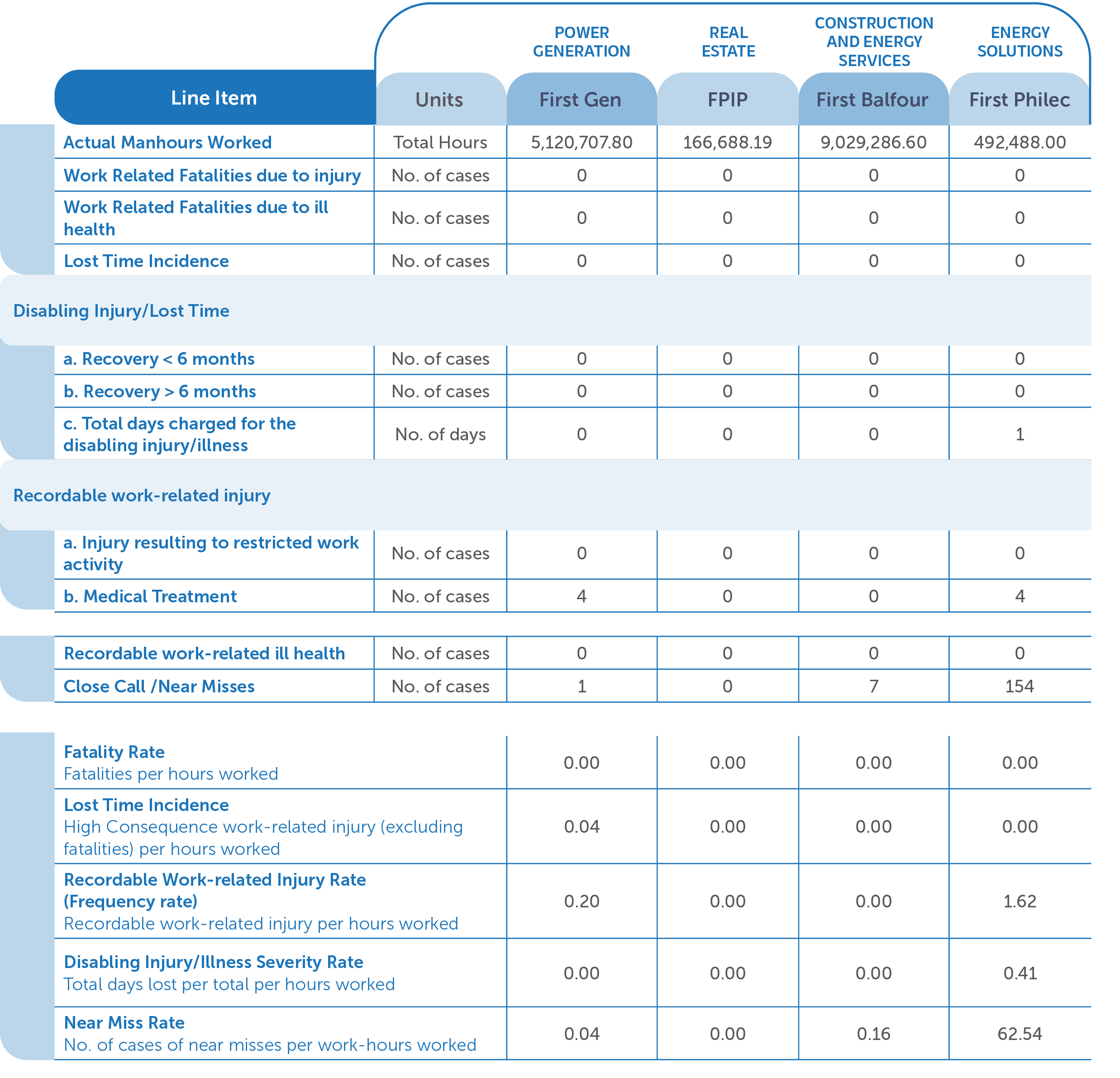
Summary of 2022 Health and Safety Data for Contractors
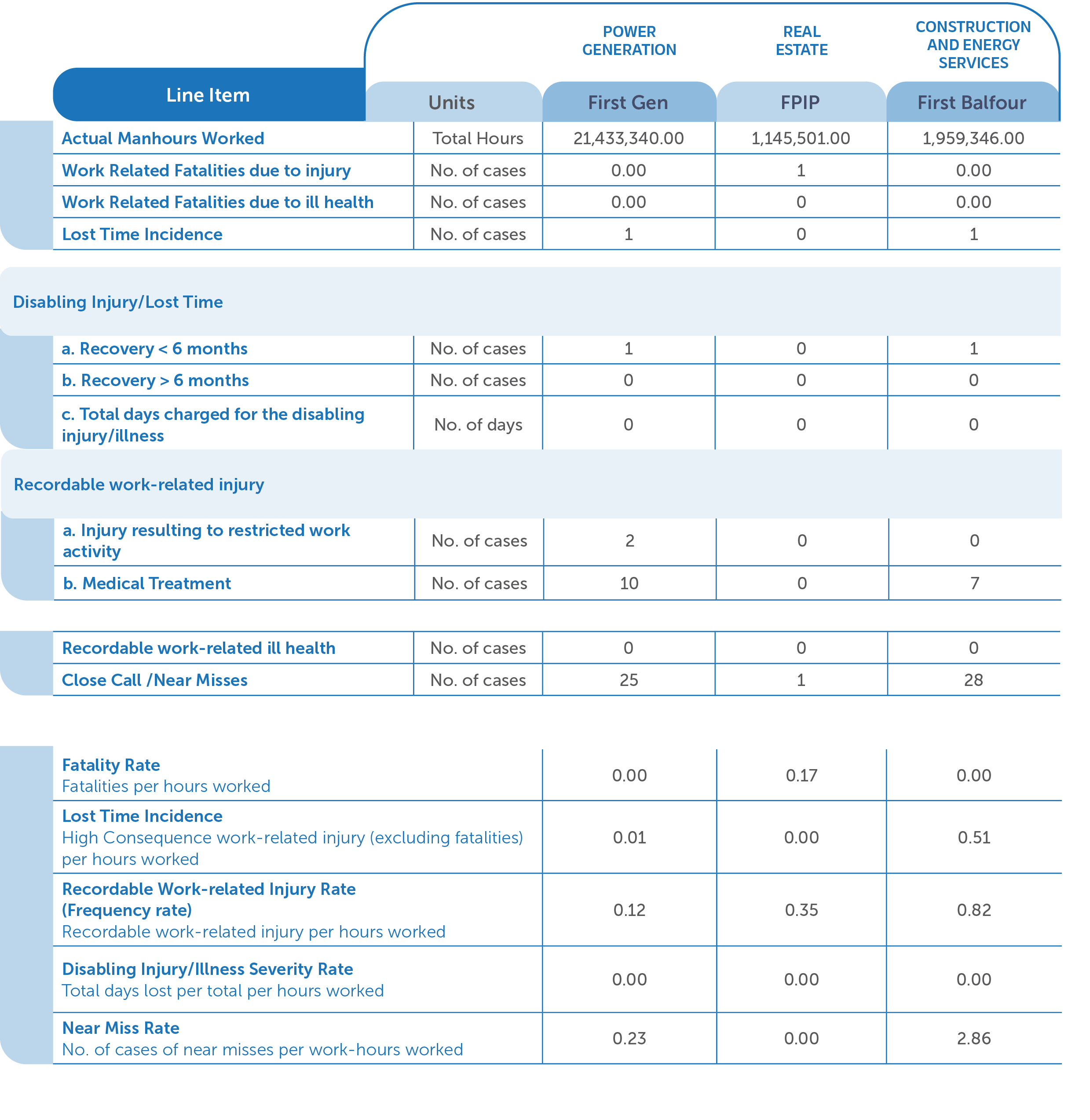
In addition to exerting efforts on meeting the health and safety industry standards, the conglomerate also monitors any admin lapses that occurred in the year to check any gap in our safety mechanisms. There were four regulatory admin issues in 2022 from the power generation segment. These consist of delayed renewal of the permit of safety officers from inactive exploration projects.
Our Compensation Strategy for Employees
We ensure regular reviews of pay equity within the organization and the external labor market through the benchmarking of practices. We design our salary structure and benefits package following the minimum legal requirements. To remain competitive in the talent market, we look for ways to improve our total compensation package while balancing affordability.
Our core compensation strategy lies on three principles:
- Ensuring that compensation programs and policies support the delivery of the corporate strategy and create long-term sustainable shareholder value;
- Pay for performance;
- Keeping our competitive market position in relation to total rewards (base pay, variable compensation, and benefits)
Through these, we seek to attract people to join the organization, retain key talent and reward high-performing individuals, and motivate employees to develop their skills and competencies based on the changing demands of their jobs and of the business. The policy applies to the Company’s senior management and to the overall workforce.
Our compensation and benefits programs contribute to our business success by balancing market competitiveness and affordability based on a total compensation approach. These are performance driven, flexible, legally compliant, and are absent of any gender-discriminatory pay practices. The key elements of our compensation structures are annual base salary, fixed bonuses, variable compensation based on annual targets, and employee benefits.
Directors
Under the Corporation’s By-Laws, directors shall receive a reasonable per diem for his/her attendance at each meeting and may receive a portion of the annual profits as determined by the Chairman and the President. Directors receive a per diem for every board and committee meeting. In addition, Section 29 of the Revised Corporation Code provides that the total yearly compensation of the directors shall not exceed ten percent (10 percent) of the net income before income tax of the corporation during the preceding year.
Summary
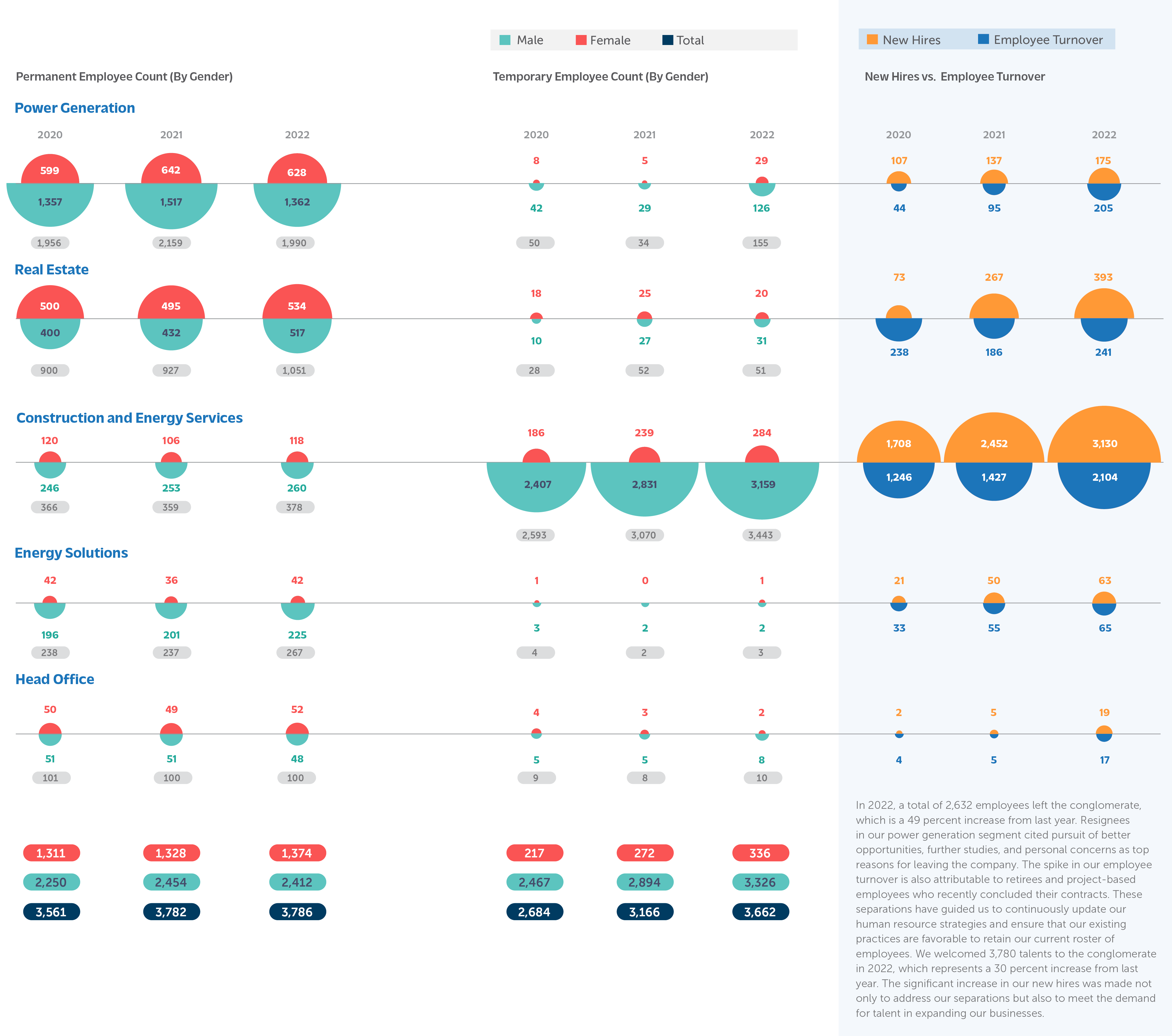
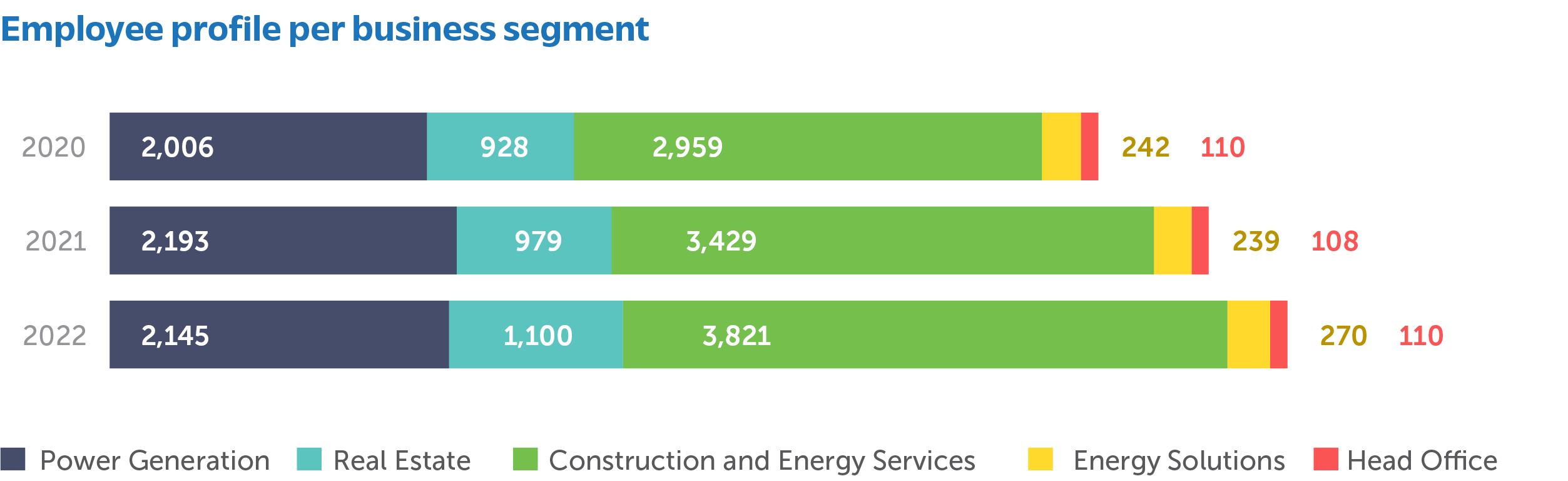
• Despite the competitiveness of the current talent market, we maintained a robust roster of 3,786 employees to continuously meet the demands of our customers and industry.
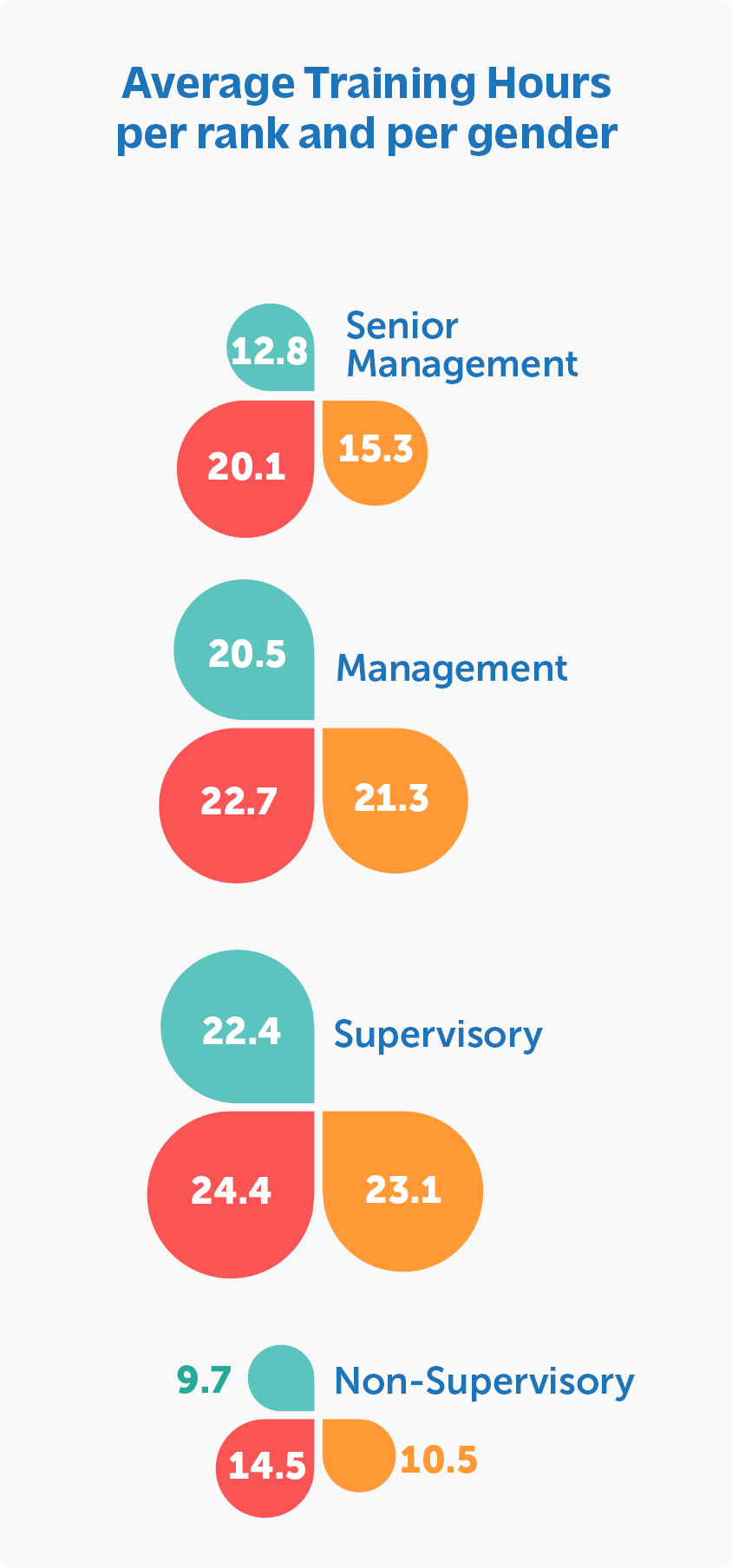
• In empowering our employees to be responsible in their growth and development, we continue to offer our training and development programs while institutionalizing policies on internal talent mobility and career development. In 2022, our employees logged 12.02 average training hours.
• We continued to maintain our occupational health and safety systems, which allowed us to enjoy safety incidence rates within industry standards.
• We safeguarded the rights of our employees through the completion of our Human Rights Due Diligence process and our Human Rights Management Plan to address potential negative impacts to human rights.
• In engendering a culture of diversity, equality, and inclusion, we partnered with various external organizations (USAID, UN Women, and PBCWE) to increase our internal capacities in handling GED and DEI initiatives. Moving forward, we will cascade our learnings to the entire conglomerate and assist them in building and implementing their gender equality and diversity action plans.
Non-Financial Outcomes
We maintained our human capital in terms of having the required pool of employees to run the operation, improving their health and safety, and employee embedding for them to align their interests and values with the company’s purpose. Despite the slight dip in our average training hours, we continuously maintained our human capital in training and development by strategically positioning our programs to better meet the needs of our employees. We continuously created and improved on our human capital in diversity, equality, and inclusion, as we develop mechanisms to support GED and DEI initiatives within the conglomerate.
For biodiversity and habitat protection, there has been an increase in natural capital.
Financial Outcomes
With our current roster of employees and initiatives to support their respective development and growth, we believe that our conglomerate is positioned to continuously deliver value to our customers and stakeholders. This, in turn, translated to profit for the business.


