ESG Material Issues
In 2022, FPH updated its material ESG topics. This came three years after the last materiality update. Reassessing our material ESG topics lets us review what is important to the Company and our stakeholders, and ensures that FPH is able to address the pressing issues of our current time.
This 2022 Integrated Report follows the Integrated Reporting framework as guided by the Value Reporting Foundation. The financial analysis adopts the Philippine Financial Reporting Standards.

FPH commissioned the University of Asia & Pacific - Center of Social Responsibility (UA&P-CSR) to conduct the Materiality Assessment Process. In determining the ESG topics of FPH, UA&P-CSR used a pioneering method called the “Quadrilateral Materiality Assessment Tool” in combination with the Double Materiality Approach. With double materiality, equal emphasis is given to financial materiality and impact materiality. The former focuses on the Company’s economic value creation for the benefit of its investors while the latter focuses on the Company’s impact on its multiple stakeholders in alignment with Carol Sanford’s Stakeholder Pentad, namely customers, co-creators, environment and host communities.
Materiality Assessment Methodology
The Quadrilateral Materiality Assessment Tool developed by UA&P-CSR consists of two main processes: a) a process of surfacing, and b) a process of prioritization. The process of surfacing involves four main activities:

After the process of surfacing pertinent ESG topics, the process of prioritization is conducted. This consists of discussions and reviews with the FPH senior management regarding the results of the process of surfacing.

Results of Materiality Assessment
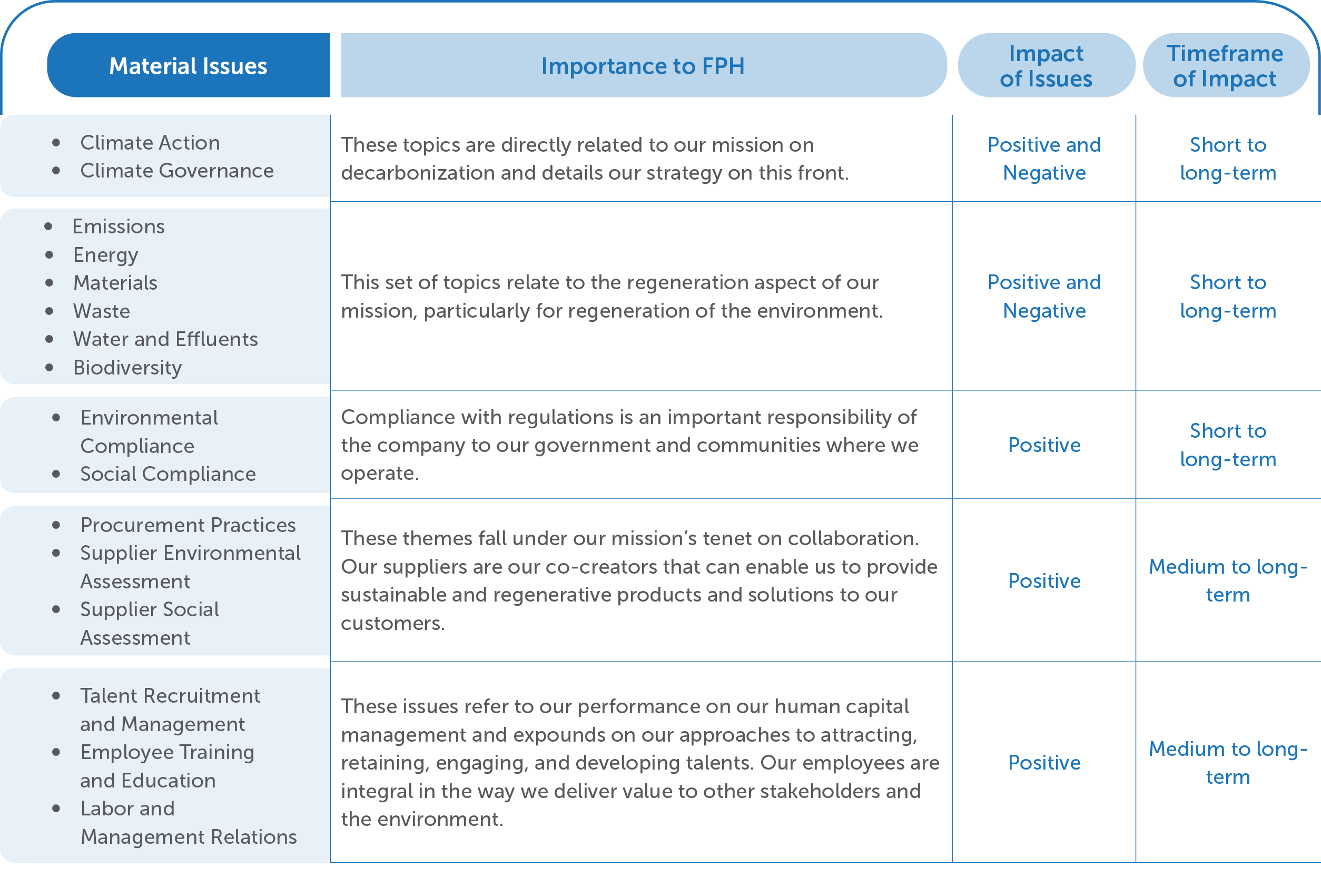
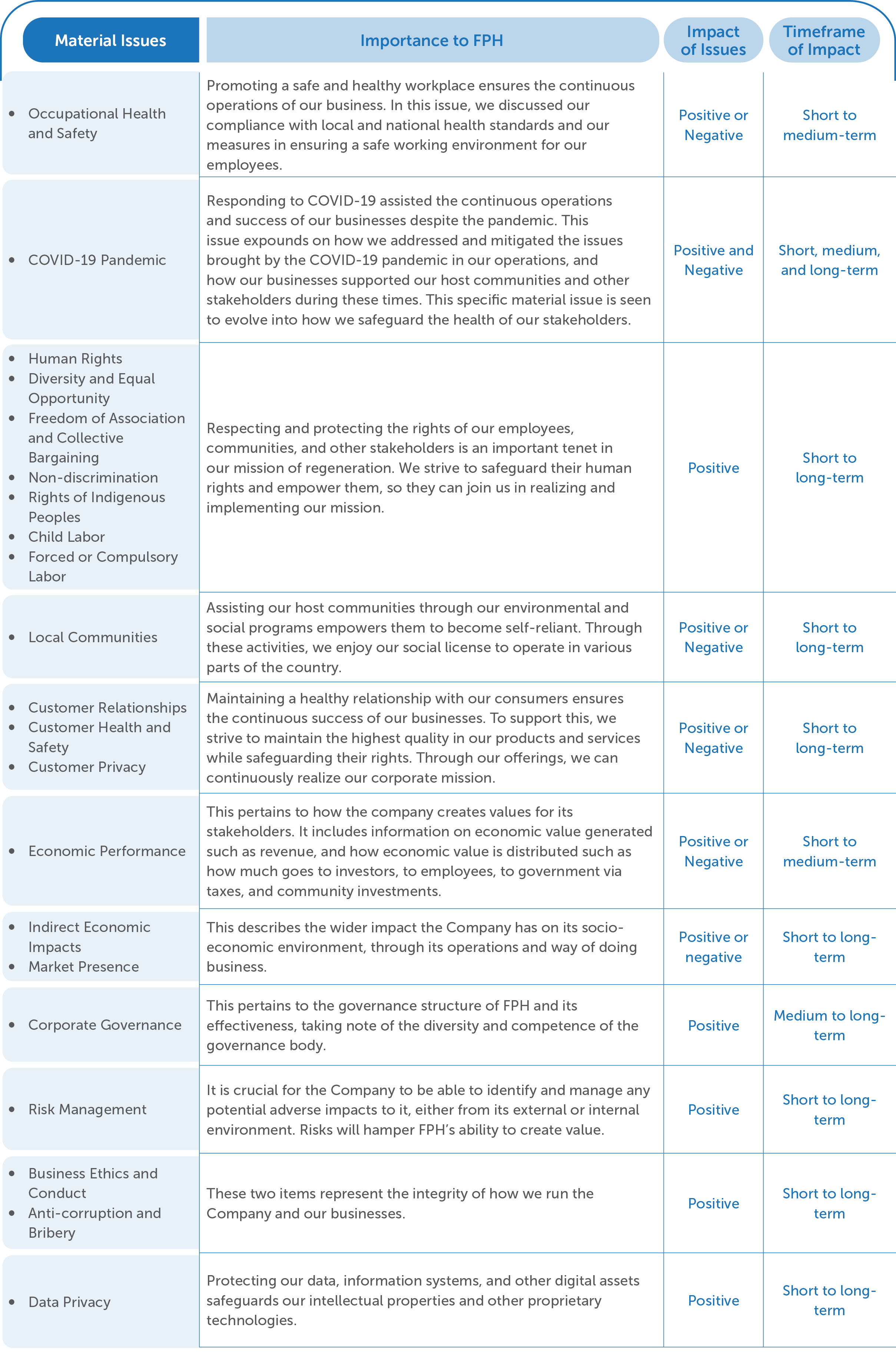
The materiality assessment concluded with 37 final material ESG topics, presented on the right.
In comparison to our previous list of material ESG issues, the assessment showed that there are now new priorities such as supplier environmental and social assessment, customer health and safety, customer privacy, and transparency on ethical governance practices.