

Power Generation

First Gen Corporation (First Gen) is a leading power producer in the country with the largest portfolio of power plants that run on clean and renewable fuels. Harnessing energy from steam, water, wind, solar, and natural gas makes First Gen well-positioned to meet the country’s growing demand for clean and reliable electricity. With a diversified and flexible portfolio of assets, First Gen will continue to play a dominant role in the Philippine power industry as the country transitions to a full renewable energy future. Through its subsidiaries, First Gen owns 31 power plants operating strategically in all three main island grids of the Philippines. These power plants have a total of 3,501.4 megawatts (MW)* of installed capacity, making First Gen one of the Philippines’ largest independent power producers. Energy Development Corporation (EDC), a subsidiary where First Gen holds a 65 percent voting stake, stands out as the world’s largest vertically integrated geothermal company.
*as of Dec. 31, 2022
First Gen recognized a revenue of USD2.7 billion in 2022, a notable 23 percent increase from the previous year’s revenue of USD2.2 billion. This growth can be attributed to higher sales volumes from its natural gas and geothermal plants, as well as higher average selling prices.
First Gen reported an attributable recurring net income (RNI) of USD265.4 million in 2022, reflecting a 5.2 percent or USD13.0 million increase from the previous year’s RNI of USD252.4 million.
First Gen’s subsidiary, EDC, made a strong recovery in 2022 from the better performance of its geothermal plants, while the hydro platform delivered a slight increase in income. The natural gas platform effectively mitigated fuel supply curtailment issues from Malampaya and was able to sell more power in 2022.

Key Highlights
Natural Gas
FGEN LNG Corporation (FGEN LNG), a wholly-owned subsidiary of First Gen, is set to complete in 2023 its Interim Offshore Liquefied Natural Gas (LNG) Terminal Project in Batangas City. This project will play a crucial role in ensuring availability of fuel for the country’s gas-fired power plants as supply of gas from the Malampaya field nears depletion and while the search for new indigenous gas sources continues. Aside from its potential to promote projects in the transport sector and other support industries, the entry of LNG will encourage the development of more new natural gas-fired power plants that can replace other plants running on more expensive and polluting fuels.
FGEN LNG Corporation (FGEN LNG), a wholly-owned subsidiary of First Gen, is set to complete in 2023 its Interim Offshore Liquefied Natural Gas (LNG) Terminal Project in Batangas City. This project will play a crucial role in ensuring availability of fuel for the country’s gas-fired power plants as supply of gas from the Malampaya field nears depletion and while the search for new indigenous gas sources continues. Aside from its potential to promote projects in the transport sector and other support industries, the entry of LNG will encourage the development of more new natural gas-fired power plants that can replace other plants running on more expensive and polluting fuels.
The tugboats supplied by Svitzer, which will be used to manage the safe arrivals and departures of the FSRU and LNG carriers, are in Batangas Bay and are scheduled to undergo acceptance tests in the second quarter of 2023. The tugboats will be mobilized for the berthing, un-berthing, navigation assistance, as well as provide other services including fire-fighting, pollution control, port & vessel security services, pilot and boarding party transfer, and fender management.
Malampaya’s natural gas supply remained constrained in 2022 due to the gas field’s impending depletion. As a result, First Gen experienced several gas restrictions, until supply improved towards the latter part of the year. Despite the Malampaya field’s restrictions, the Santa Rita, San Lorenzo, and Avion gas plants continued their consistent operations through the use of liquid fuel.
Geothermal
EDC inaugurated in April 2022 the 3.6-MW Mindanao-3 Geothermal Binary Power Plant in Kidapawan City. This expanded the supply of clean, reliable and stable power from EDC’s existing Mount Apo geothermal facility in Mindanao. EDC’s 28.9-MW Palayan Bayan Binary Project, the 20-MW Tanawon Geothermal Power Plant, and the 28-MW Mahanagdong Geothermal Brine Optimization Plant have all progressed in accordance with their respective development and construction schedules. EDC expects the Palayan Bayan Binary Project to reach commercial operations by September 2023.

Hydro
In 2022, First Gen initiated the early works for its Aya Pumped-Storage Hydroelectric Power Project as part of its plan to increase capacity by up to 120MW in the Pantabangan-Masiway complex in Nueva Ecija. First Gen also continued with the pre-development activities for its run-of-river projects in Mindanao; namely, the 32-MW Bubunawan, 33-MW Tagoloan, 30-MW Puyo, and the 39-MW San Isidro project. Once completed, these hydro projects will benefit from government programs, such as the Feed-in Tariff and the Green Energy Auction Programs, which aim to encourage the development of more renewable energy projects.
First Gen Hydro Power Corporation (FG Hydro) achieved an additional milestone in 2022 after the Energy Regulatory Commission awarded the certificates of compliance (COC) to FG Hydro’s Pantabangan Hydroelectric Power Plant (PHEP) and Masiway Hydroelectric Power Plant (MHEP). Prior to the release of the COCs, the facilities operated under a provisional authority to operate.
Wind and Solar
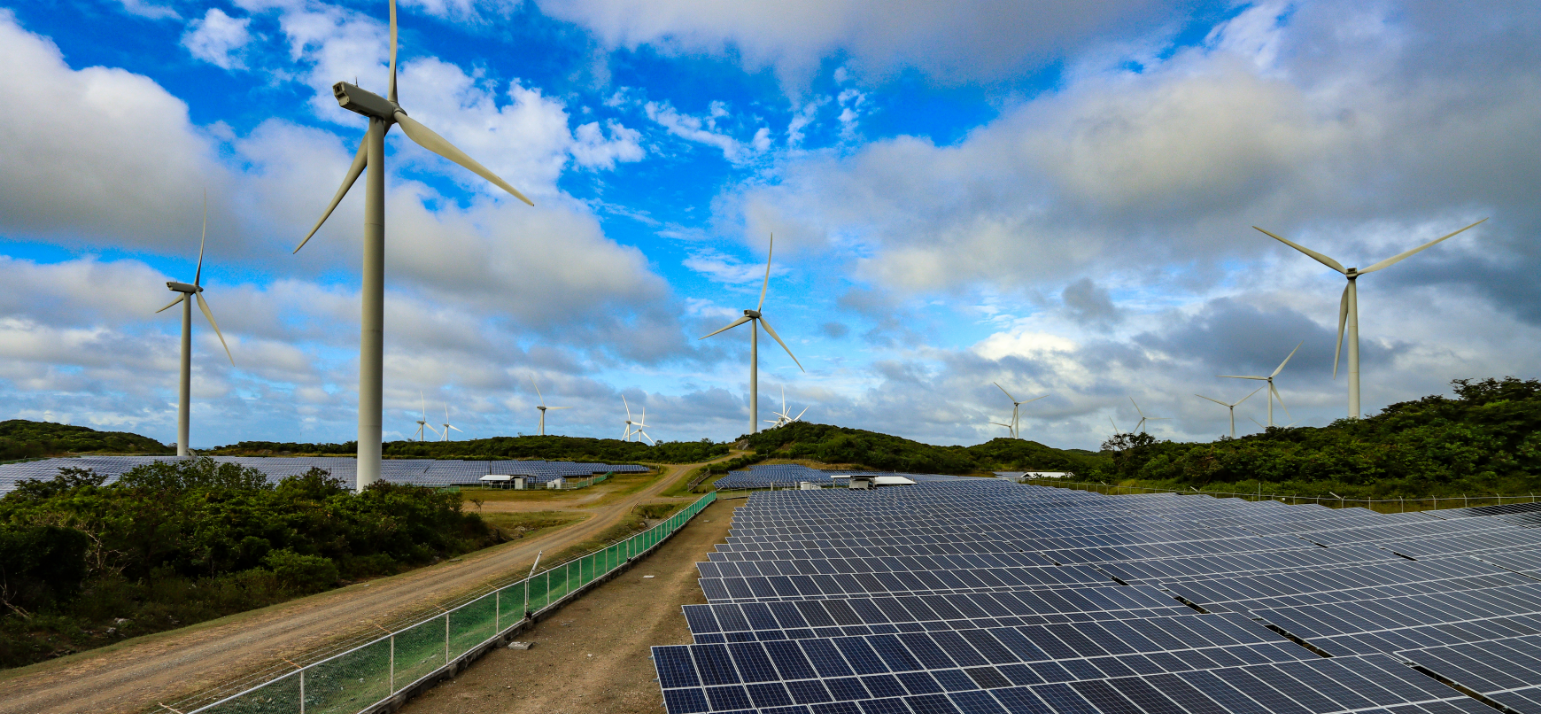
For several months in 2022, weak La Nina conditions slowed down wind speeds, which in turn affected the operations of EDC’s wind farm in Burgos, Ilocos Norte. On the other hand, operations of EDC’s solar farm on the same site remained consistent. EDC kept its maintenance activities mostly within schedule, thus, avoiding unplanned outages.
First Gen has also secured two renewable energy service contracts from the DOE for solar and wind at the end of 2022.
Looking Forward
The Philippine Energy Plan (PEP) 2040 outlines a strategy to significantly increase Philippine Power Capacity – driven primarily by natural gas and renewables. This is consistent with the Government’s overall strategy to wean the country away from coal and provide for growing power demand from cleaner energy sources. Given this, First Gen sees the opportunity to also grow its natural gas and renewable portfolio, targeting 13 GW by 2030, with a majority of this additional capacity coming from renewables.
For the Interim Offshore LNG Terminal project, its next phase involves mechanical completion in the first quarter of 2023 and commissioning in the second half of the year.
The development of the LNG facilities also forms part of First Gen’s strategic and long-term program of decarbonization. Under this strategy, these flexible gas plants will help stabilize power supply by quickly matching the sudden change in output of variable renewable facilities (VREs) whose capacities are expected to grow under the PEP. First Gen has partnered with Tokyo Gas of Japan in pursuing the LNG Terminal that the DOE-led Energy Investment Coordinating Council earlier declared as an “Energy Project of National Significance.” As First Gen’s partner, Tokyo Gas holds a 20 percent stake in the project.
First Gen is also finalizing plans to develop the 1,200-MW Santa Maria Combined Cycle Gas Turbine (CCGT) Project. As part of the plan, its subsidiary First Gen Ecopower Solutions Inc. has already initiated the process for selecting contractors that will handle the Santa Maria CCGT Project.
Hand-in-hand with its pursuit of natural gas projects, First Gen continues a program to expand its renewable energy capacities, particularly in geothermal and hydro. In 2023, it will begin the construction of the 100- to 120-megawatt (MW) Aya Pumped Storage Hydropower Project in Nueva Ecija, while completing the pre-development activities for its run-of-river projects in Mindanao.
Moreover, First Gen expects to secure renewable energy service contracts over areas that it has shortlisted and filed applications for. Part of the Company’s RE expansion plan for 2023 include the development of its first four battery energy storage systems (BESS) near its geothermal sites in Bacman, Tongonan, Southern Negros, and Northern Negros. Once completed, these BESS projects will optimize the existing geothermal resources and also provide ancillary services to the grid.
The implementation of Retail Competition and Open Access (RCOA) has allowed consumers to choose their energy source. In the process, RCOA has provided First Gen with new opportunities to expand its coverage to a much larger market base. RCOA’s threshold qualification of at least 500-kilowatt consumption or with an average billing of Php950,000 is set to gradually decrease, ultimately leading to household level contestability–which will enable even smaller power users to choose their own electricity suppliers. In response to these opportunities, First Gen is not only expanding its clean energy portfolio but also evolving the way it caters to its customers to better serve the retail market.


